A permanent, 5-year-warranted answer to damp and moisture in your building using damp-proof barriers, crystalline coatings and resin injection. Expert team with 15+ years of experience in Istanbul and Izmir.
Damp-proofing is a treatment that tackles chronic damp — the cause of staining, flaking paint, salt efflorescence and mould on walls — at its source. First, a professional moisture survey identifies the source; where rising damp is found, an injected damp-proof course (DPC) is installed, and the concrete surface is then finished with a crystalline coating and a breathable renovation render. A standard residential application is completed in 2-4 days, backed by a 5-year written warranty.
Damp-proofing and moisture control is a technical treatment that traces chronic damp in building elements back to its source and eliminates it permanently using professional methods such as damp-proof barriers and crystalline coatings. Unlike temporary fixes such as repainting or re-rendering, damp-proofing blocks moisture from entering the structure with physical and chemical barriers.
With over 15 years of site experience and its own Dryvatec-branded materials, İMG Yapı Yalıtım Mühendislik A.Ş. is one of Türkiye's leading applicators, solving damp and moisture problems permanently through root-cause analysis. Every stage — from the professional survey with moisture meters through the application to warranted handover — is managed by our specialist engineering team.
Damp and moisture are among the most common — and most neglected — problems in buildings. In the parts of a structure in contact with the ground, moisture enters through mechanisms such as the hydrostatic pressure of sub-soil water, rising damp (capillary action) and condensation. The millions of microscopic pores and capillary cracks inherent in concrete give moisture a path through the building elements.
Waterproofing that was installed incorrectly, incompletely or below standard during original construction is one of the most frequent roots of damp problems. Over the years, shrinkage cracks in the concrete, cold joints and pipe penetrations become entry points for moisture. What begins as a faint damp stain spreads along the wall over time, turning into detached render, mould growth and serious structural damage.
Inadequate ventilation, faulty thermal insulation and loss of weathertightness in the building envelope are also significant factors that trigger or worsen damp. Condensation — warm indoor air meeting cold wall surfaces — makes damp markedly worse, particularly in winter. When these factors combine, the building's moisture load keeps rising, and any intervention that does not address the source remains temporary.
Research shows that people living in damp environments face a 30-50% higher risk of respiratory illness (WHO data). In reinforcement continually exposed to moisture, bar diameter loss can reach 34% and the drop in load-bearing capacity 67% within 10 years. These figures show how critical a permanent answer to damp and moisture is — for health and for structural safety alike.
Water in the soil climbing up through the pores of the concrete and along the building elements, causing damp staining at the base of ground-floor walls
Water droplets forming where warm indoor air meets cold wall surfaces, leading to moisture build-up around window reveals and in corners
Mould and fungal spores multiplying in constantly damp conditions, causing respiratory complaints and a persistent, health-threatening odour
Detached render, blistering paint, reinforcement corrosion, rotting timber and concrete decay — damage from chronic damp that is hard to reverse
If you have noticed one or more of the signs below, your building has a damp and moisture problem. Early intervention minimises structural damage, health risks and cost.
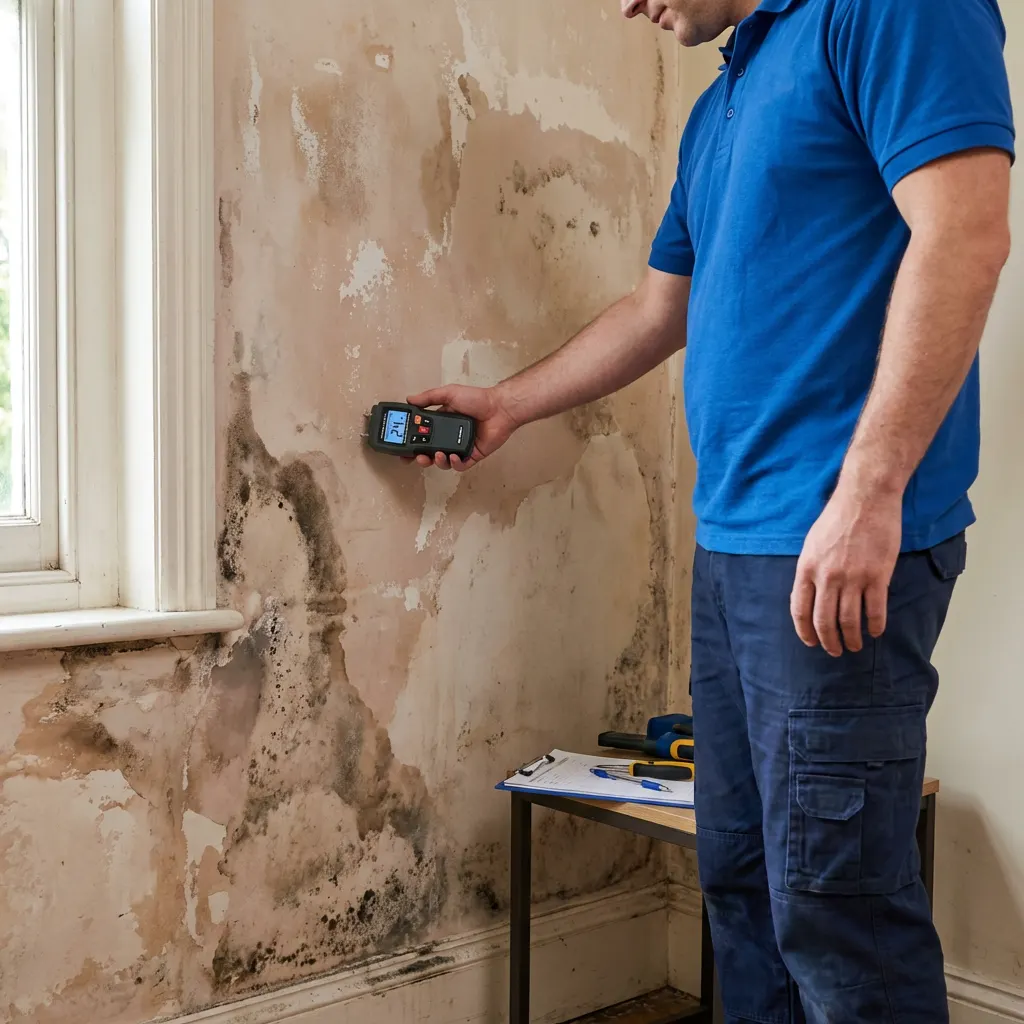
Dark damp stains on the wall surface — wet patches concentrated near floor level, in corners and around pipe penetrations. The stains grow and spread over time.
White, powdery salt crystals forming on the wall surface. A clear sign that water is carrying dissolved minerals through the concrete or brick to the surface — and a pointer to the source of the damp.
Black, green or grey mould patches in corners, at ceiling-wall junctions, around window reveals or behind cupboards. A serious respiratory health risk that ventilation alone will not cure.
A heavy smell of mould and damp on entering the room. The sign of high relative humidity and a chronic leak. Air fresheners and ventilation will not remove it permanently.
Wall render blistering, cracking or coming away in pieces. Bubbling and peeling paint. A sign that moisture pressure has broken the bond of the surface layers.
Constant misting on the glass and pooling water on window sills. The clearest sign of condensation-driven moisture — and of an insulation deficiency.
A comparison of the two approaches to solving damp and moisture. The difference between a permanent solution and a temporary one is stark.
At İMG Yapı Yalıtım Mühendislik A.Ş. we tackle damp and moisture with root-cause analysis rather than surface fixes, combining professional damp-proof barriers, crystalline coatings and resin injection. We determine the most suitable strategy for your building through an on-site survey and deliver a permanent solution backed by a 5-year warranty.
A systematic damp-proofing process refined over more than 15 years of site experience, compliant with the TSE EN 1504 standard.
Our specialist team inspects the building thoroughly, establishing the moisture distribution, damp intensity and the affected areas. Surface and depth moisture are measured with professional moisture meters (pin-type and non-invasive hygrometers) and a moisture map is produced. Readings taken at multiple points establish how the moisture is distributed. This stage is critical for accurate diagnosis and a permanent solution.
The origin of the damp is established: groundwater pressure, rising damp, condensation, loss of weathertightness or a plumbing leak. Correctly diagnosing the source of the damp is the single most critical step in setting the application strategy. Any intervention made without identifying the source remains temporary and wastes money. Several sources can act at once, so a comprehensive analysis is carried out.
Moisture-trapping surface layers (render, paint, plaster, wallpaper, tiles) are removed to expose the parent structure (concrete, brick). Mould and fungal residues are mechanically cleaned off and the surface is disinfected. Loose particles, dust and laitance are removed to obtain a clean surface the material can penetrate. Under TSE EN 1504-2, surface preparation is the fundamental determinant of application success.
A damp-proof barrier material suited to the source of the damp and the surface type is applied. The barrier forms an impermeable layer between the building surface and the source of the damp, controlling both liquid water passage and vapour diffusion. Floor-wall junctions, corner zones and critical transition points receive particular attention. Together with the crystalline coating, the barrier provides two-layer protection.
Dryvatec crystalline waterproofing material is applied to concrete surfaces in at least two coats. The crystalline material penetrates the pores and capillary cracks of the concrete, forming needle-like crystals within it. These crystals permanently block the passage of moisture and water through the concrete. Any points of active leakage are sealed by resin injection. During curing, the surface is moistened regularly to support the crystallisation reaction.
Once curing is complete, a control measurement with professional moisture meters verifies the success of the application. The entire surface is inspected in detail and further treatment is applied where needed. After quality control, the space is handed over and a 5-year written warranty certificate is issued. Under the warranty, any recurrence of damp arising from the application is remedied free of charge.
For damp-proofing to be successful and long-lasting, the following technical requirements must be met in full.
Each type of damp has a different source and mechanism. Accurate diagnosis is the foundation of the right solution.
Water in the soil climbing against gravity through the pore structure of concrete and brick. It creates a horizontal tide mark at the base of walls. The most common type of damp on ground floors and in basements. The solution: an injected damp-proof course (DPC) and a damp-proof barrier.
Water droplets forming where warm, humid indoor air meets cold, poorly insulated wall surfaces. Most visible around window reveals, in corners and on external walls. The solution: a damp-proof barrier + improved thermal insulation + ventilation control.
Water pressure created when the water table rises above foundation level. It shows itself as active leakage through basement retaining walls and the floor slab. The solution: negative-side waterproofing with crystalline coatings and resin injection.
Hidden leaks from water supply pipes, waste pipes or rainwater downpipes seeping into the building elements. It shows itself as localised damp stains and sudden water marks. The solution: leak detection + repair + a damp-proof barrier.
In damp-proofing applications we use the crystalline coating, damp-proof barrier, acrylate gel injection and polyurethane resin injection materials of our own brand, Dryvatec. Because we manufacture the material ourselves, quality control is in our hands from start to finish. There is no middleman margin — you get a direct manufacturer's assurance.
Many companies on the market buy in materials from various brands and apply standard fixes to damp problems; we use Dryvatec products made to our own formulation and set a solution strategy tailored to each building. This gives us full control over material quality, batch consistency and the success of the application. Dryvatec products are manufactured to TSE EN standards.
Visit our YouTube channel for real site footage and application details.
Surface-level fixes waste money and time. Choosing the right contractor is critical to solving the problem once — and permanently.
Every damp-proofing application comes with a 5-year written warranty certificate. Any issue covered by the warranty is resolved at no cost. Our application archives are kept on record.
We manufacture the crystalline, damp-proof barrier and injection materials we use ourselves. No middleman margin — quality control is entirely in our hands. Direct manufacturer's assurance.
Rather than covering the damp over, we trace its source with professional instruments. Accurate diagnosis is the foundation of a permanent solution — we set a strategy tailored to each building.
Thousands of completed waterproofing projects since 2009. We have delivered solutions for every building type, every condition and every type of damp. Experience means accurate diagnosis and a lasting result.
Rapid response to every district from our Maltepe (Istanbul) and Konak (Izmir) offices. Local teams and material depots in both major cities.
A detailed survey using pin-type and non-invasive moisture meters. A moisture map establishes the source and intensity of the damp. Decision-making backed by data.
From our two offices we provide damp-proofing and moisture control across every district of Istanbul and Izmir.
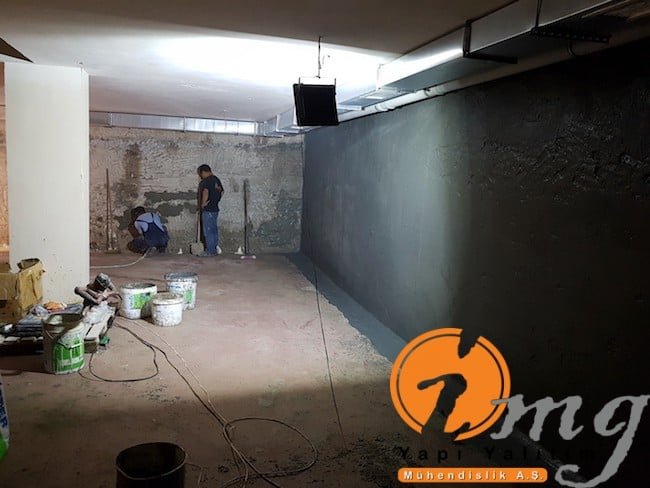
From our Maltepe office we provide damp-proofing across all districts of Istanbul. On-site surveys and applications on both the European and Asian sides.
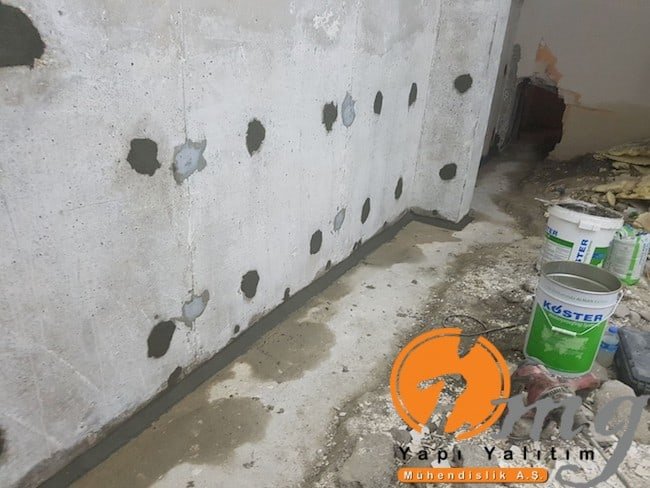
From our Konak office we provide damp-proofing across all districts of Izmir. A wide service network throughout the Aegean region.
We have compiled the questions our clients ask most often, together with our technical answers.
A permanent answer to rising damp on ground floors with DampStop injection and crystalline coatings.
DetailsSolving mould and fungal growth at the source. Identification of the moisture source and professional waterproofing.
DetailsA permanent, 5-year-warranted answer to basement leaks using no-dig negative-side crystalline and injection methods.
DetailsFor your damp and moisture problem, fill in the survey request form or give us a call. Our technical team will get back to you as soon as possible to arrange an on-site moisture survey and assessment.