A permanent, 5-year-warranted cure for water leaking through movement joints — flexible resin injection, mechanical joint profiles and elastomeric sealant applications. Specialist team with 15+ years of experience in Istanbul and Izmir.
Expansion and movement joint waterproofing seals the movement joints left between building blocks for seismic and thermal movement against water ingress using flexible materials. Once the old filler has been removed, a mechanical joint profile is installed in the joint; the voids are then filled by flexible polyurethane resin injection and the surface is finished with an elastomeric sealant. The system accommodates deformation and keeps the joint watertight even as it moves. A 5-year written warranty is issued on completion.
Expansion joint waterproofing is a technical sealing system applied to stop, permanently, the water leakage that originates from the expansion (movement) joints left between the blocks of a building. Expansion joints are essential structural gaps that allow the building to move in response to thermal expansion, wind loads, seismic forces and ground settlement. Waterproofing these joints is achieved by applying flexible resin injection, a mechanical joint profile and an elastomeric sealant as complementary layers.
With more than 15 years of site experience and its own Dryvatec-branded materials, İMG Yapı Yalıtım Mühendislik A.Ş. is one of Türkiye's leading application specialists in expansion joint waterproofing. We have successfully completed hundreds of metres of expansion joint waterproofing on residential, commercial and industrial buildings.
Expansion joints are controlled gaps left between building blocks to provide structural movement capacity. By absorbing the building's movements caused by earthquakes, temperature changes, wind loads and ground settlement, they protect the structural frame. Yet however well a joint is designed, the filler material placed inside it has a finite service life. Over time these fillers age, harden, crack or detach from the joint face under the effects of UV exposure, weathering, temperature cycling and mechanical stress.
Once the filler material degrades, rainwater, groundwater or ground moisture begins to seep into the building through the gaps that open up along the joint. At basement-level expansion joints, hydrostatic water pressure intensifies the leakage further. Water travelling along the joint both reaches the steel reinforcement around it — initiating corrosion — and causes damp, mould and moisture problems in the interior spaces.
Because Türkiye lies in a seismic zone, almost every multi-block building includes expansion joints. In shopping centres, car parks, hospitals, housing estates, industrial facilities and bridges, waterproofing these joints is critical to structural safety. A leaking expansion joint is not just an indoor comfort issue — over the long term it leads to a loss of structural integrity.
Important:Concrete crack repair techniques must never be applied to expansion joints. Rigid filler materials that block the joint's movement capacity cause the concrete alongside the joint to fracture at the next structural movement. For this reason, only flexible, movement-capable materials may be used in expansion joints.
Active water flow along the expansion joint — dripping or spurting leaks, and water ingress that increases after rain
Cracking, hardening or detachment of the sealant, foam or asphalt filler inside the joint
Persistent damp around the joint, white salt deposits (efflorescence), black mould patches and a musty smell
Reinforcement corrosion around the joint, concrete degradation, rust staining and loss of load-bearing capacity
Buildings contain different types of expansion joints. Each joint type has its own waterproofing requirements and application approach.
Expansion joints left between separate building blocks. Typically 2-5 cm wide, this is the joint type subject to the most intense structural movement. It runs from basement level up to the roof and requires waterproofing at every level.
Joints formed in large floor slabs to accommodate thermal expansion. Frequently found in basement car parks, industrial facilities and shopping centre floors. In areas with a high water table they are directly exposed to water pressure.
Expansion joints between the bridge deck and the abutments. They are exposed to heavy traffic loading and environmental conditions. When their waterproofing fails, corrosion sets in rapidly on the bridge bearings and girders.
Expansion joints within basement reinforced concrete retaining walls. Directly exposed to hydrostatic water pressure, they are among the most critical water entry points. Without professional sealing, continuous active leakage is the result.
There are two core approaches to expansion joint waterproofing. The right method — or a combination of the two — is determined for each building by an on-site survey.
At İMG Yapı Yalıtım Mühendislik A.Ş.we generally apply a layered system for expansion joint waterproofing: injection + profile + elastomeric sealant are applied together for maximum protection. During the on-site survey we determine the best combination for the joint's condition and deliver a solution backed by a 5-year warranty.
A systematic application process refined through more than 15 years of site experience, compliant with the TSE EN 1504 and EN 15651 standards.
Our specialist team inspects the expansion joints in detail, establishing the joint width, depth, degree of movement, the condition of the existing filler material and the points of active water ingress. The intensity and distribution of the water pressure are determined with moisture meters. The combination of methods to be applied is decided at this stage, according to the joint's location (basement, ground slab, façade or roof) and its type. An accurate assessment is the foundation of a successful application.
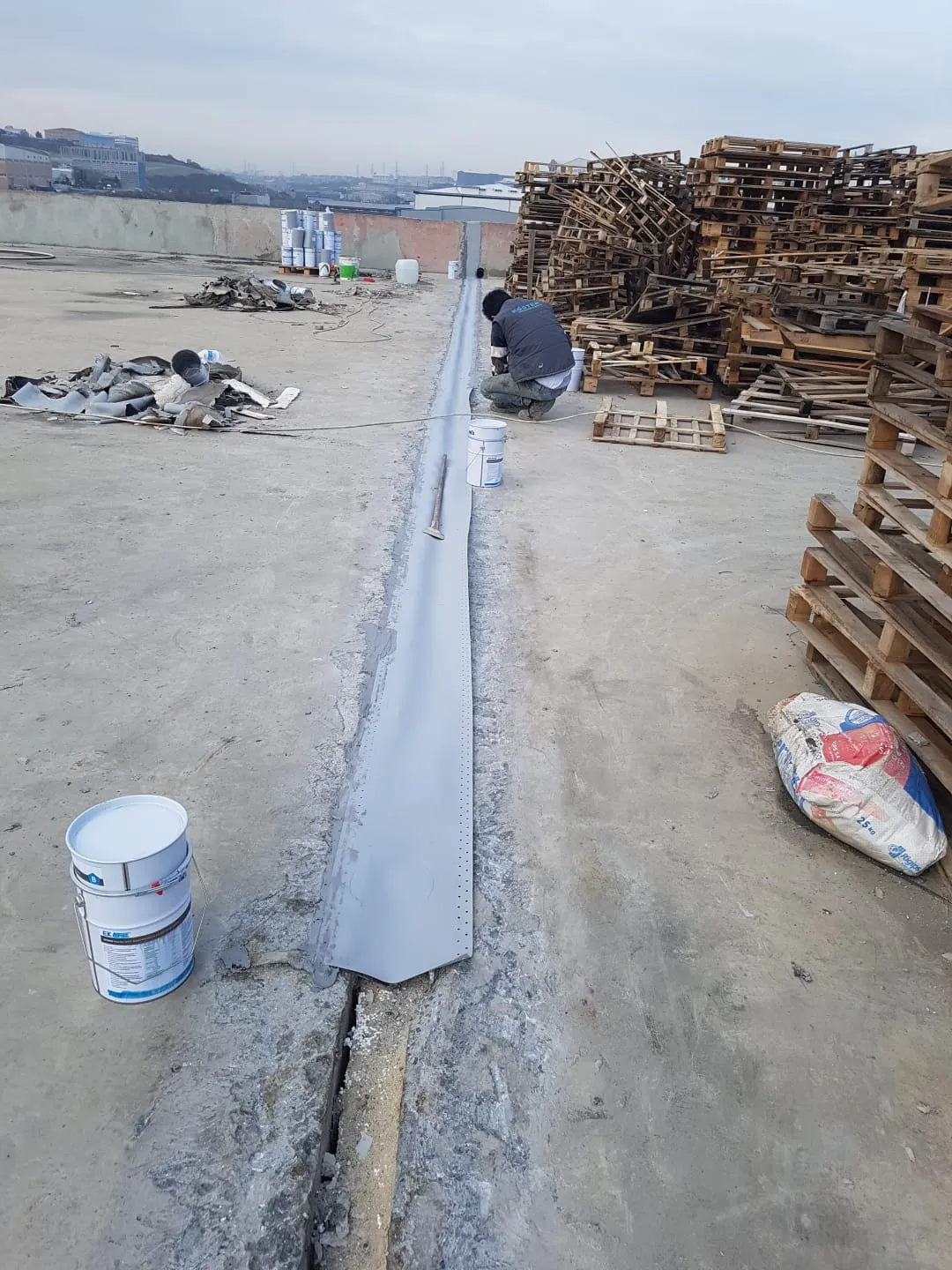
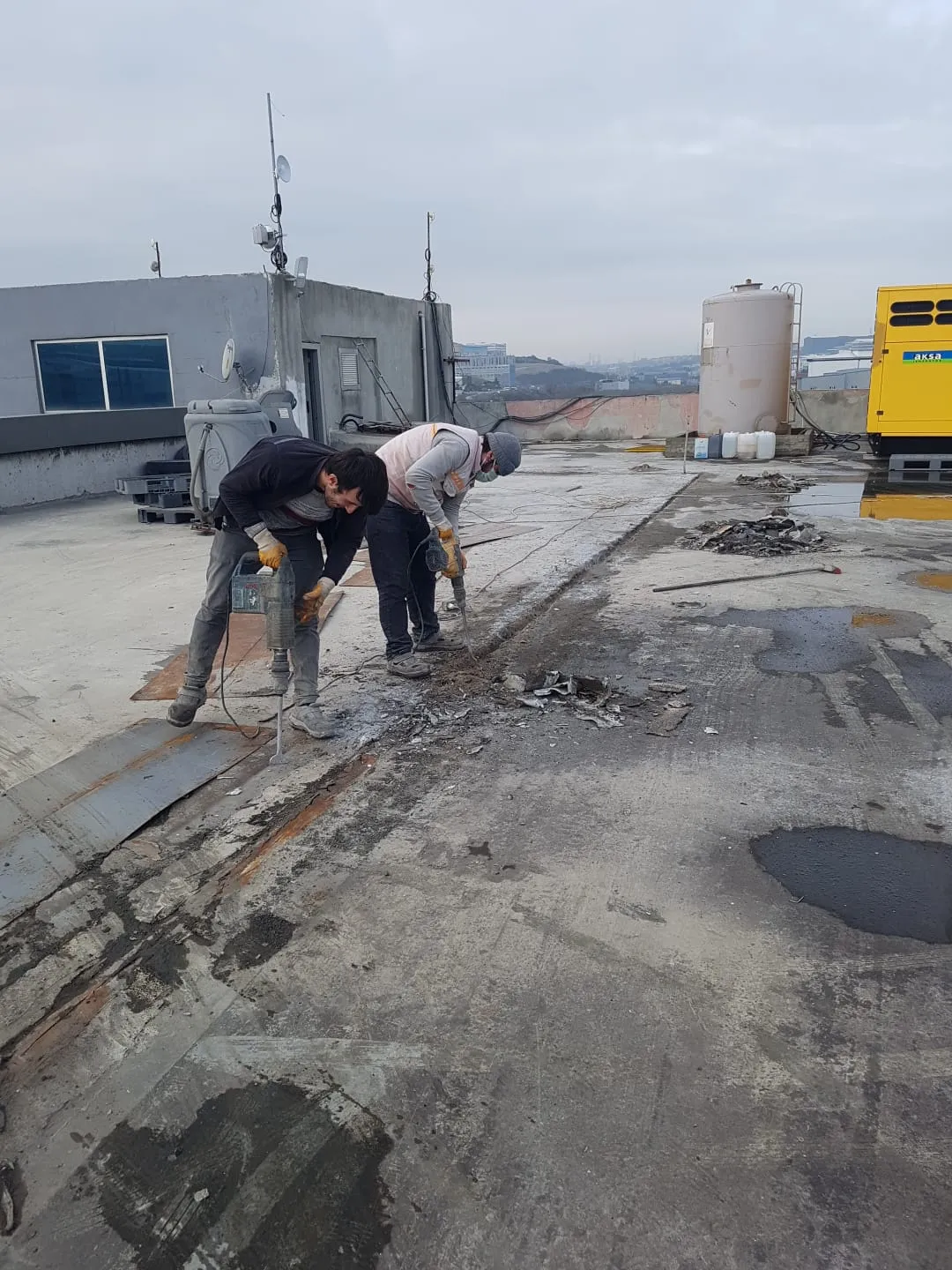
Old sealant, foam backer, asphalt, silicone and degraded filler materials inside the joint are removed completely. The joint faces are prepared mechanically to obtain a smooth, sound and clean bonding surface. Loose concrete fragments and residues of decomposed material are cleared away. A new application is never carried out over old filler, because the new material cannot bond adequately to it and cannot follow the joint's movements.
A mechanical joint profile suited to the joint's type, width and movement capacity is selected and installed along the joint. Rubber-, PVC- or stainless steel-based profiles are used. The profile is fitted so that it mechanically accommodates the joint's expansion and contraction movements. Profile junctions are sealed with dedicated adhesives to make them watertight. This layer provides the joint's long-term mechanical durability.
Dryvatec flexible polyurethane injection resin is injected under pump pressure at the points of active water ingress and along the joint. Injection packers are set at regular intervals along the joint. On contact with water, the polyurethane expands to fill every void within the joint and stops active leakage instantly. Thanks to its flexible structure it follows the joint's movements without fracturing.
A polyurethane- or polysulphide-based elastomeric sealant is applied to the joint surface. Before the sealant is installed, a primer is applied to the joint arrises to increase bond strength. The sealant forms a flexible layer that follows the joint's expansion and contraction movements and blocks water entry from the top surface. The sealant layer acts as the protective final coat over the injection and profile system.
Once the application is complete, a water test verifies the effectiveness of the waterproofing. Watertightness is checked along the full length of the joint. After the quality check, a 5-year written warranty certificate is issued. Under the warranty, any water leakage attributable to the application is remedied free of charge. Application photographs are archived and the project is kept on record.
For expansion joint waterproofing to succeed and last, the following technical requirements must be met in full.
Real application stages from our expansion joint waterproofing projects. Click a photograph to enlarge it.
In our expansion joint waterproofing applications we use the flexible polyurethane injection and elastomeric sealant materials of our own brand, Dryvatec. Because we manufacture the materials ourselves, quality control stays with us from start to finish. No middleman margin — direct manufacturer assurance.
Dryvatec flexible injection materials are formulated with the elasticity to accommodate the movement capacity of expansion joints. Even after curing they retain their elastic structure, do not fracture as the joint expands and contracts, and maintain their watertightness. All our products are manufactured in accordance with TSE EN standards.
Visit our YouTube channel for real site footage and application details.
Expansion joints are among the most vulnerable water entry points in a building. The wrong material choice or a faulty application can make the problem worse instead of solving it.
Every one of our expansion joint waterproofing applications comes with a 5-year written warranty certificate. Any issue is resolved free of charge under warranty. Our application archives are kept on record.
We manufacture the flexible injection and elastomeric sealant materials we use ourselves. No middleman margin — quality control is entirely in our hands. Direct manufacturer assurance.
We apply a three-layer protection system: injection + profile + elastomeric sealant. A layered approach delivers lasting results where single-method fixes fail.
Since 2009 we have completed hundreds of metres of expansion joint waterproofing. We have delivered solutions for every joint type, every building type and every condition.
Rapid response to every district from our Maltepe (Istanbul) and Konak (Izmir) offices. On-the-ground teams and material depots in both major cities.
We measure the joint's width, depth, movement capacity and water pressure with professional equipment to determine the most suitable solution. No superficial assessments.
From our two offices we provide expansion joint waterproofing services across every district of Istanbul and Izmir.
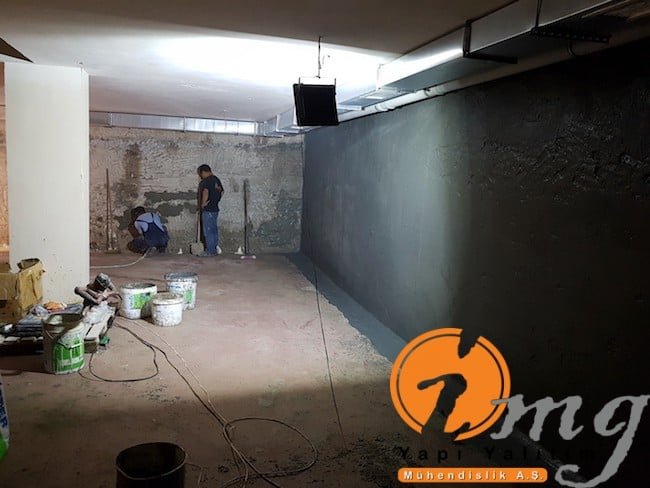
From our Maltepe office we provide expansion joint waterproofing across every district of Istanbul. On-site surveys and application on both the European and Asian sides.
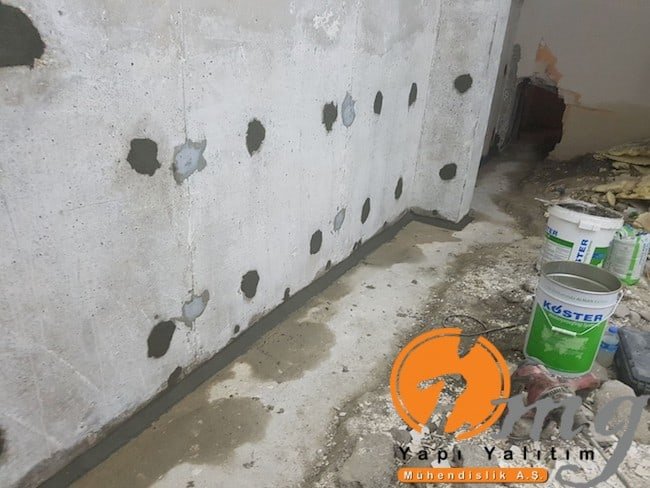
From our Konak office we provide expansion joint waterproofing across every district of Izmir. A wide service network across the Aegean region.
We have compiled the questions our customers ask most often, together with the technical answers.
A permanent cure for water leaking through RC retaining walls, using negative-side crystalline coatings and resin injection.
DetailsStop active water leaks through cracks and joints within minutes using acrylate gel and polyurethane resin injection.
DetailsA permanent, 5-year-warranted cure for basement water ingress using no-dig negative-side crystalline coatings and acrylate gel injection.
DetailsFill in the survey request form or call us about the leaking expansion joint in your building. Our technical team will get back to you promptly to arrange an on-site assessment and survey.