A permanent, no-dig answer to concrete cracks, cold joints and active water leaks using polyurethane resin injection, backed by a 5-year warranty. Specialist team with 15+ years of experience in Istanbul and Izmir.
Resin injection waterproofing is a no-dig repair method in which specialist resins are pumped under pressure into concrete cracks, cold joints and active leak points. Polyurethane resin is injected through packers set along the crack; on contact with water the material swells and stops the leak within minutes. For hairline cracks and sensitive structures, acrylate gel injection is preferred. A standard application is completed in 1-2 days and comes with a 5-year written warranty.
Polyurethane resin injection waterproofing is a professional waterproofing method in which polyurethane resin is injected under high pressure to stop active water leaks coming through cracks, cold joints, honeycombed voids and service penetrations in reinforced concrete structures. The injected resin expands within the crack, closes off every water path and delivers permanent watertightness.
Because it can be applied to active leaks — even while water is coming in — and needs no excavation, injection is the go-to waterproofing method for existing buildings, basements, lift pits and infrastructure tunnels. With more than 15 years of site experience and its own Dryvatec injection materials, İMG Yapı Yalıtım Mühendislik A.Ş. is one of Türkiye's leading specialist contractors in this field.
In reinforced concrete structures, the most common causes of water leakage are cracks and cold joints. Concrete is not inherently waterproof; every pour creates millions of microscopic pores. On top of that, cold joints form between concrete stages poured at different times. Shrinkage cracks, thermal stress cracks, structural cracks under load and settlement cracks all open clear routes for water into the structure.
A rising water table, rainwater collecting around the building or increasing hydrostatic pressure all accelerate water entry through these cracks and joints. Basements, lift pits, water tanks and tunnel structures are under constant water pressure, making them the building elements most at risk of leaks. What begins as slight damp or dripping can, as water pressure builds, turn into an active flow.
The points where service pipes pass through concrete elements are also critical leak zones. The gap between the pipe and the surrounding concrete widens over time and becomes a water entry point. Expansion joints — the gaps left deliberately to allow the structure to move — act as direct water entry routes when they are not waterproofed.
Research shows that in reinforced concrete structures, 65% of water leaks originate at cracks and cold joints, 20% at service penetrations and 15% through the pores of the concrete itself. These figures make plain why resin injection is such a critical and widely used treatment.
Shrinkage cracks, thermal stress cracks, structural cracks under load and settlement cracks open clear routes for water into the structure
The interfaces between concrete stages poured at different times become permeable under water pressure
The gaps between pipes or cables and the surrounding concrete widen over time and become water entry points
The gaps that allow the structure its natural movement act as direct water entry routes when left unwaterproofed
If you have noticed one or more of the signs below in your building, professional resin injection is needed. Early intervention keeps both the structural damage and the cost to a minimum.
Water running or dripping along a crack in a concrete wall or ceiling. An active leak whose flow increases with pressure — especially noticeable during wet spells.
A wet line, water trails or dripping along a cold joint or expansion joint. A neat line of dampness running the length of the joint is the classic sign.
A wet ring, dripping or active water flow around pipe or cable penetrations. Water enters through the gap between the concrete and the pipe.
White salt crystals accumulating around a crack or joint. Definitive evidence that water passing through the concrete is carrying dissolved minerals to the surface.
Water collecting along the cold joint where the wall meets the floor slab. One of the most common leak types in basements.
Concrete blistering, breaking up or flaking off around the leak point. A sign that reinforcement corrosion has begun and structural damage is progressing.
A systematic injection process developed over more than 15 years on site, in line with the EN 1504 standard.
Our specialist team identifies every crack, cold joint, honeycombed zone and active water entry point in the structure in detail. Moisture meters establish the intensity, flow rate and source of the leak. A crack map is produced and the injection points are planned. The width, depth and activity of each crack is assessed. Accurate diagnosis is the foundation of correct material selection and a successful application.
Injection holes are drilled at set intervals (typically 15-30 cm) along the identified crack or joint line. Drilling is done at a 45-degree angle to the crack so the injection material reaches its very centre. Hole diameter is 10-14 mm; depth is set according to the concrete thickness and the depth of the crack. A professional rebar detector is used during drilling so the reinforcement in the structure is not damaged.
A mechanical or surface-bonded injection packer is fitted tightly into each drilled hole. Packers are the connection fittings that channel the material from the pressure pump into the crack. Mechanical packers are tightened into place; surface-bonded packers are fixed with epoxy mortar. If the packers are not positioned correctly, the injection material escapes outside the crack and the application fails.
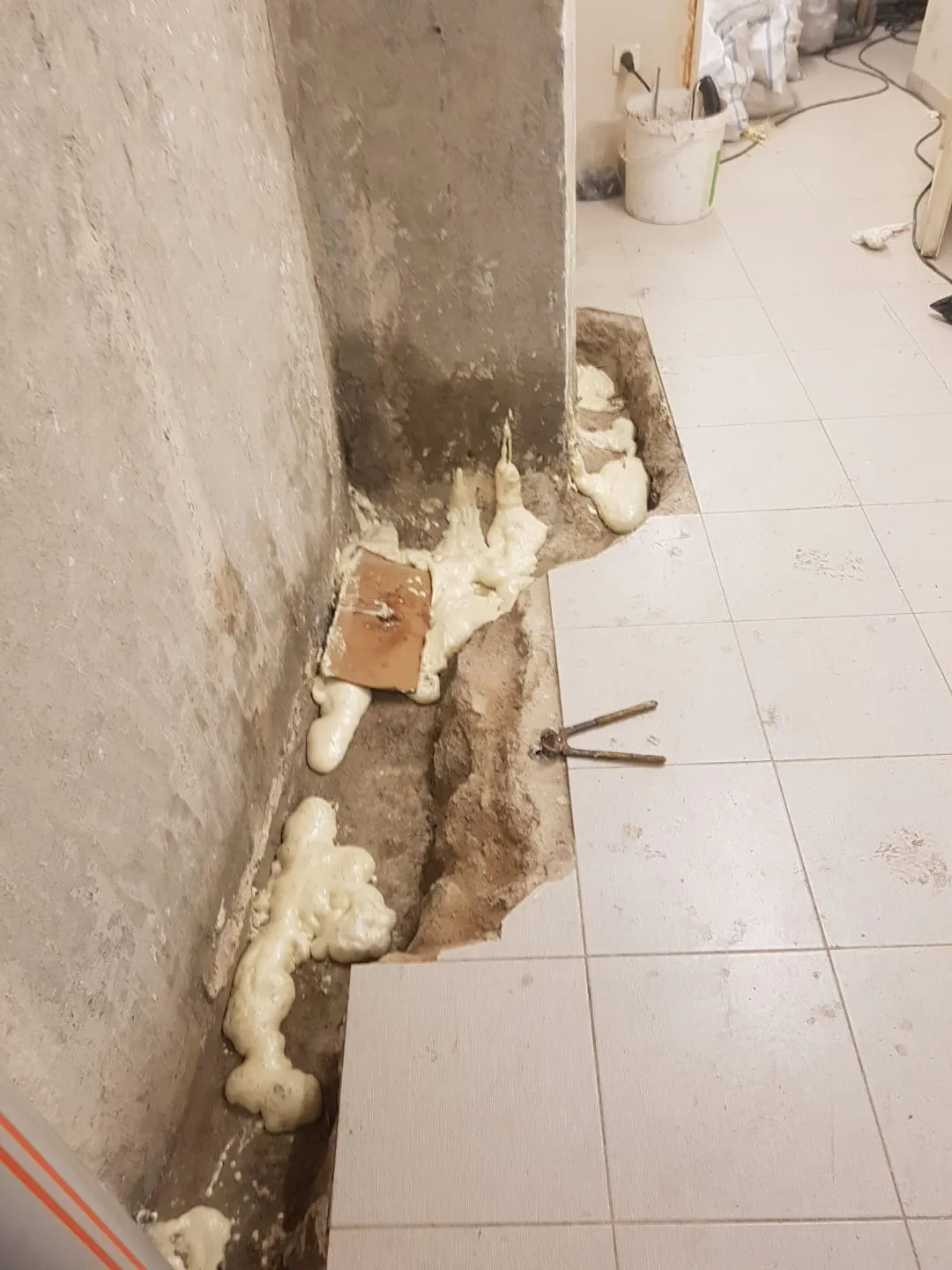
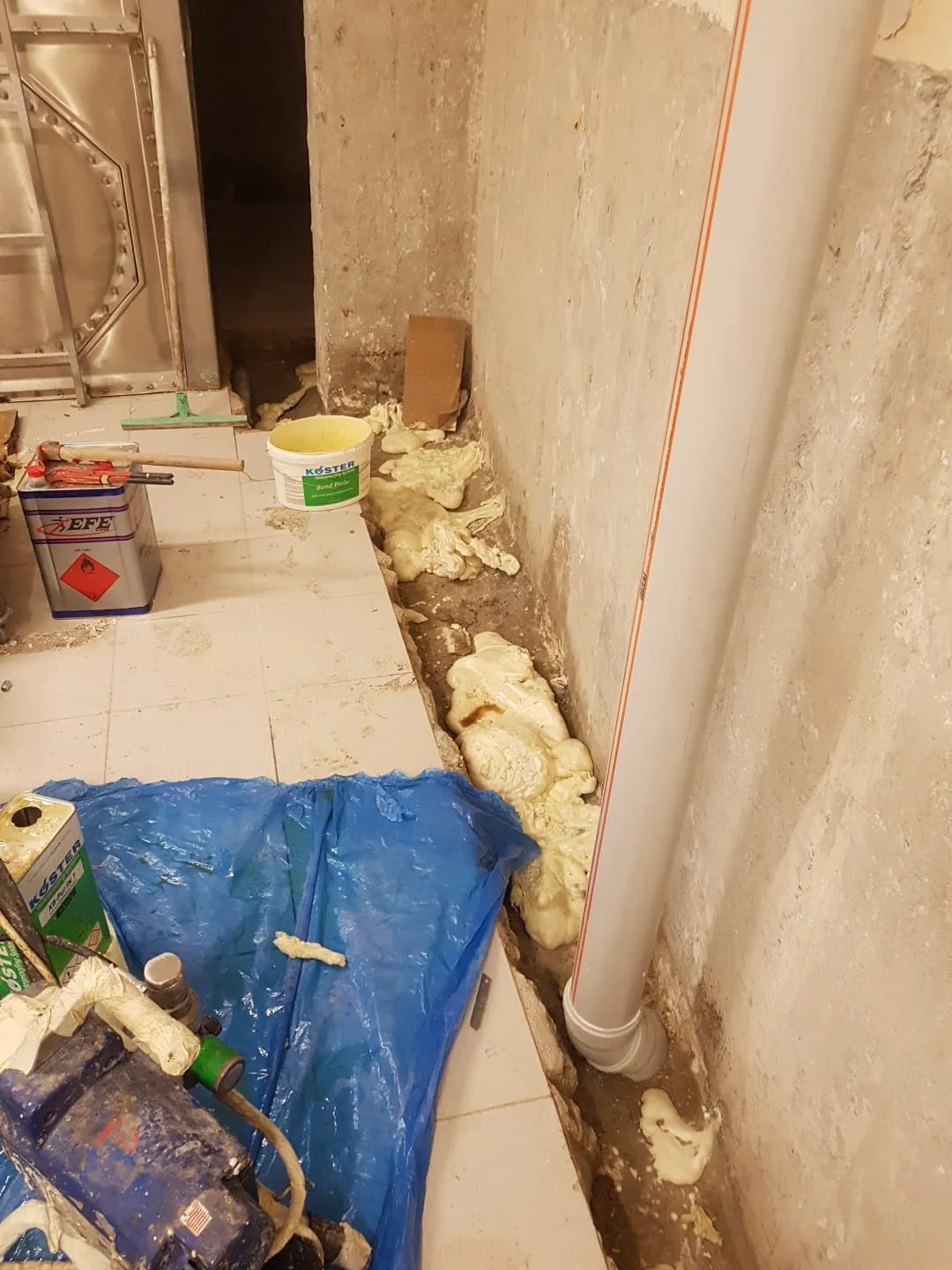
Using a high-pressure injection pump, polyurethane resin is injected into the crack through the packers. Injection generally starts at the lowest packer and works upwards. The material fills the full length of the crack and cuts off every water path. On contact with water the polyurethane foams and expands. Injection pressure and flow are adjusted to the character of the crack.
Once injection is complete, every application point is carefully checked. Material refusal is verified at each packer, and additional injection is carried out where any section is under-filled. After a waiting period of 24-48 hours, a watertightness test confirms the leak has stopped completely. The packers are removed or cut back, the holes are filled with structural mortar and the surface is made good.
Once quality control is complete, the space is handed back and a written 5-year warranty certificate is issued. The warranty covers any recurrence of water leakage attributable to the application. If any issue is reported during the warranty period, our team attends site as quickly as possible and puts it right at no charge. Before-and-after photographs of the works are archived and your project is kept on record.
For resin injection waterproofing to succeed and last, the technical requirements below must be met in full.
Real application stages from our resin injection projects. Click a photograph to enlarge it.
In our resin injection waterproofing work we use the polyurethane injection materials of our own brand, Dryvatec. Because we manufacture the material ourselves, quality control is in our hands from start to finish. There is no middleman margin — you get a direct manufacturer's guarantee.
Dryvatec polyurethane injection resin expands rapidly on contact with water, filling large cracks and voids. Dryvatec acrylate gel, with its low viscosity, penetrates even hairline cracks and provides lasting flexibility. Both products are manufactured in accordance with the applicable TSE EN standards. While many contractors buy in materials from various brands, we use Dryvatec products made to our own formulation.
The wrong material, an incorrect drilling angle or insufficient pressure can make the problem worse rather than solve it. In injection work, experience and material quality are decisive.
Every injection application comes with a written 5-year warranty certificate. Any recurrence of leakage attributable to the application is resolved at no charge.
We manufacture our polyurethane injection materials ourselves. No middleman margin — quality control stays entirely with us. A direct manufacturer's guarantee.
We can inject even while water is coming in. With our rapid-response capability on active leaks, we stop the problem on the spot.
Thousands of injection waterproofing projects completed since 2009. We have delivered solutions for every crack type, every structure and every set of conditions.
Rapid response to every district from our Maltepe (Istanbul) and Konak (Izmir) offices. Local crews and material depots in both major cities.
Rather than covering the leak over, we trace it to its source. Accurate diagnosis with moisture meters and crack mapping is the foundation of a permanent solution.
From our two offices we provide resin injection waterproofing across every district of Istanbul and Izmir.
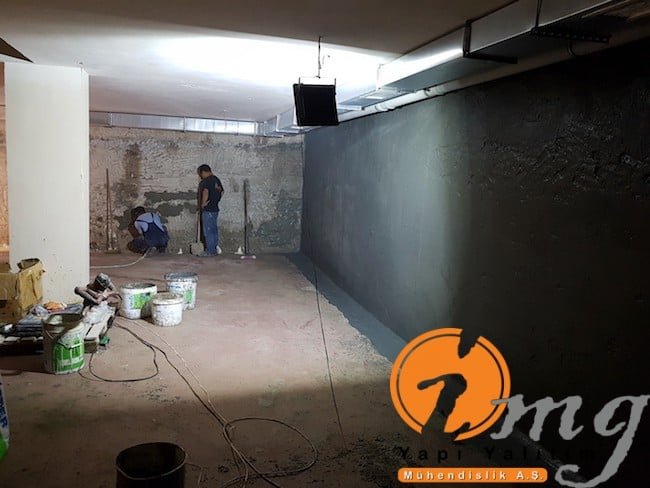
From our Maltepe office we provide resin injection waterproofing across every district of Istanbul. On-site surveys and rapid response on both the European and Asian sides.
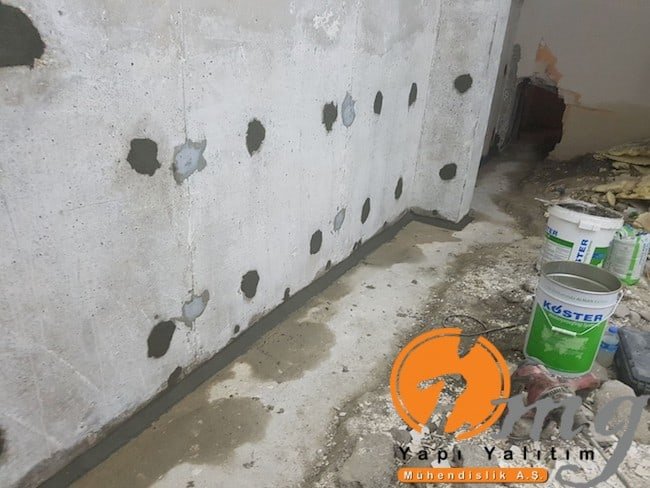
From our Konak office we provide resin injection waterproofing across every district of Izmir. A wide service network throughout the Aegean region.
The questions our customers ask most often, with our technical answers.
A permanent, no-dig solution to basement water ingress using internal crystalline tanking and resin injection — with a 5-year warranty.
DetailsWater-based, flexible acrylate gel injection that penetrates hairline cracks and delivers permanent waterproofing in sensitive structures.
DetailsA permanent solution to water ingress and damp in the lift pit using crystalline tanking and resin injection.
DetailsFor water coming through concrete cracks, cold joints or service penetrations, fill in the survey request form or give us a call. Our technical team will get back to you promptly to arrange an on-site survey and assessment.