A permanent, no-dig answer to water ingress in the lift pit: polyurethane resin injection and crystalline tanking, backed by a 5-year warranty. Specialist team with 15+ years of experience in Istanbul and Izmir.
Lift pit waterproofing is the no-dig waterproofing work that stops groundwater collecting at the deepest point of the building and shuts out hydrostatic pressure — protecting the electrical installation, the guide rail system and the concrete reinforcement. Active leaks are stopped immediately with polyurethane resin injection, then the entire surface receives crystalline tanking to make the concrete permanently watertight. In a standard pit the application takes 1-3 days and comes with a 5-year written warranty.
Lift pit waterproofing is the structural waterproofing work applied to protect the lift pit — located at the deepest point of the building — against groundwater pressure, capillary damp and hydrostatic loading. Polyurethane resin injection and crystalline tanking are applied together from the inside faces of the pit, achieving permanent watertightness with no excavation.
With more than 15 years of site experience and its own Dryvatec range of materials, İMG Yapı Yalıtım Mühendislik A.Ş. is one of Türkiye's leading specialist contractors in lift pit waterproofing. Lift pits are confined, deep spaces; producing a safe and permanent solution in these conditions calls for specialist expertise.
Lift pits sit below the foundation level, at the deepest point of the structure. Because of that position, they are exposed to constant, intense hydrostatic pressure from groundwater. Cold joints formed during concreting, shrinkage cracks, honeycombed (segregated) zones and service penetrations all give water a route into the pit. In older buildings especially, the most common cause is foundation waterproofing that was inadequate — or never done at all.
During wet spells and seasonal transitions the water table rises, and that rise directly increases water ingress and ponding in the lift pit. Concrete is not a waterproof material: every pour creates millions of microscopic pores. Through capillary action, these pores allow water to travel through the concrete. What begins as small damp patches develops over time into active leaks and standing water in the pit.
Water collecting in a lift pit is not merely a structural problem; it is also a serious electrical and life-safety hazard. The lift machinery, electrical cabling, control panel and guide rail system in the shaft are all exposed to a permanently damp environment. This can lead to short circuits, fire and sudden lift stoppages — genuinely life-critical risks. Across Türkiye, a significant share of lift accidents can be traced to electrical faults in poorly maintained, waterlogged pits.
Research shows that if the steel reinforcement inside concrete remains in continuous contact with water for 10 years, bar diameter falls by 34% and load-bearing capacity by 67%. Because the lift pit is directly connected to the building's load-bearing system, the structural consequences of this damage are extremely serious.
Water in the pit reaching electrical cables creates a short-circuit and fire hazard. Lift control boards get damaged.
Persistent ponding at the base of the pit, active seepage from the wall surfaces and dripping points
Corrosion of the guide rails, buffer mechanism and guide shoes — mechanical deterioration that endangers the safe running of the lift
Reinforcement corrosion, concrete decay, cracking in the pit walls and weakening of the building's load-bearing system
If you have noticed one or more of the signs below, your lift pit has a waterproofing problem. Early intervention is critical for life safety and structural integrity.
Water collecting at the bottom of the lift pit, its level rising during wet spells in particular. Water that is pumped out but keeps coming back.
Vertical water trails, wet zones and active dripping points on the pit walls. Typically concentrated at cold joints, pour interfaces and corner junctions.
White, powdery salt crystals forming on the pit walls. A sign that water passing through the pores of the concrete is carrying dissolved minerals to the surface.
Rust marks on the guide rails, fixings and any reinforcement exposed in the pit walls. Corrosion of metal components threatens lift safety.
A smell of mould and damp when the lift doors open. High relative humidity also affects the electronics in the lift car.
Concrete flaking off the pit walls, blistering surfaces and cracking. This indicates that reinforcement corrosion has advanced far enough to burst the concrete — urgent attention is required.
A systematic process developed over more than 15 years on site, in line with the EN 1504 standard.
Our specialist team inspects the lift pit thoroughly, identifying water entry points, active cracks, cold joints, pour interfaces and the distribution of damp. Surface and depth moisture levels are measured with professional moisture meters. The depth of the pit, the rate of water ingress, the condition of the electrical installation and the lift type are all assessed, and an application plan is drawn up. Accurate diagnosis and planning are the foundation of a permanent solution.
In coordination with the lift maintenance company, the lift is taken out of service and the car is secured in a safe position. The water in the pit is pumped out. The concrete surfaces are mechanically cleaned; plaster, paint and loose concrete are removed to expose the structural concrete. Electrical cables and equipment are protected. Service penetrations, cold joints and cracks are prepared for injection. If this preparation step is skipped, the material cannot penetrate the concrete and the application fails.
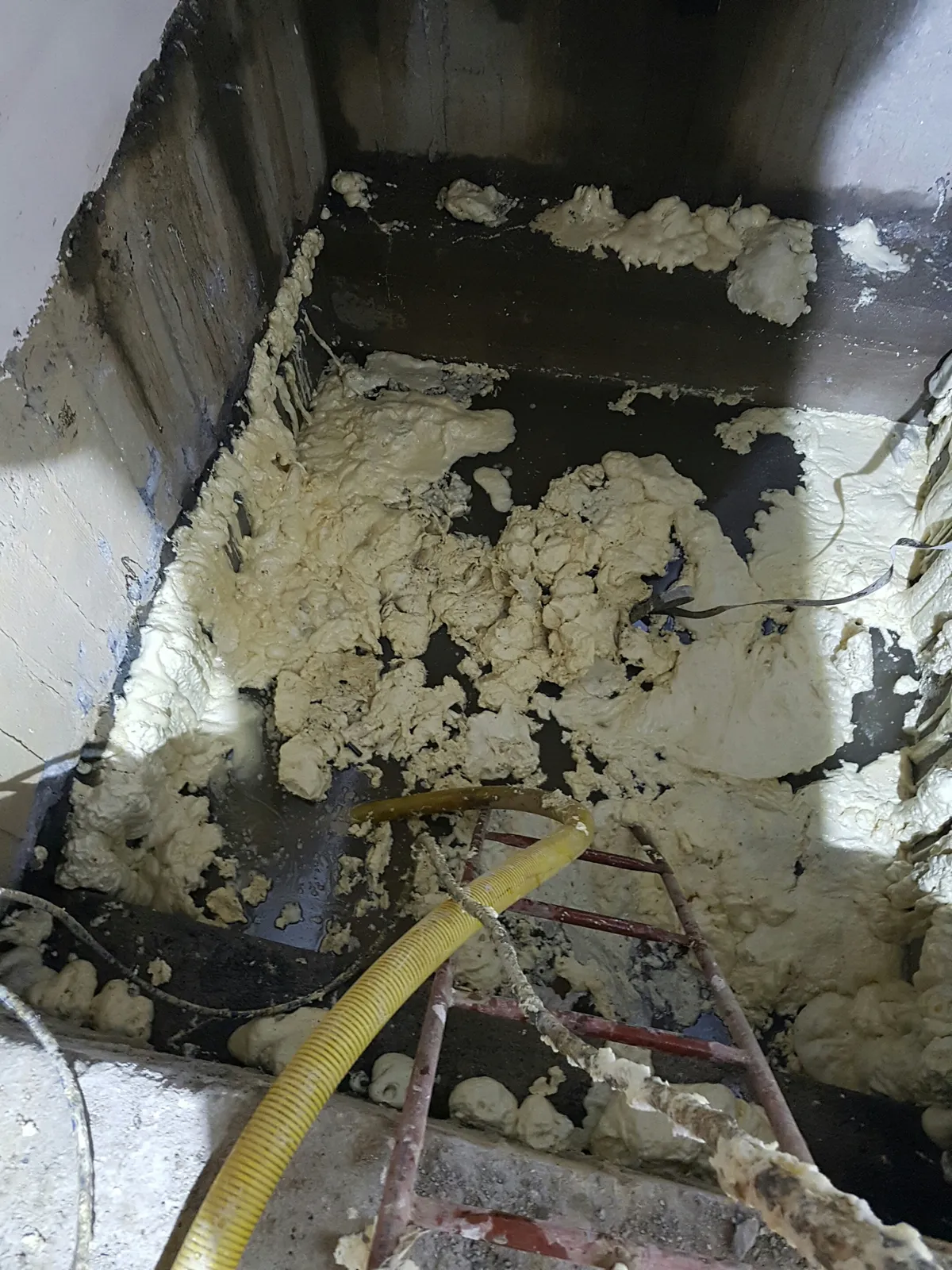
Dryvatec polyurethane injection resin is injected into active water entry points, cracks, cold joints and pour interfaces. Injection packers are set at intervals along the leak paths and the material is injected under pressure with a pump. On contact with water the polyurethane expands, filling the crack or void and stopping the leak immediately. Because of the confined geometry of the pit, injection work here demands particular care and technical expertise.
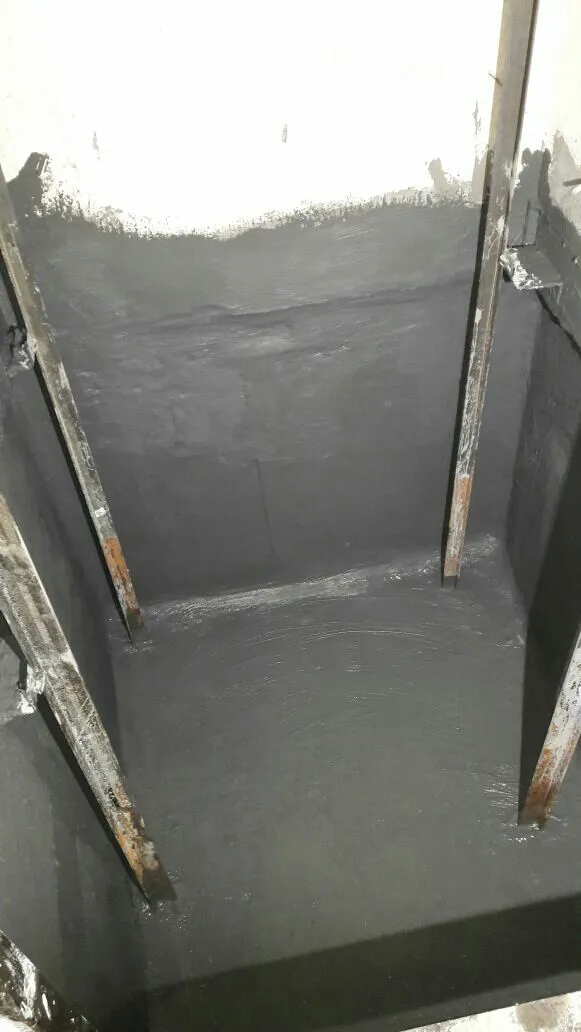
Dryvatec crystalline waterproofing material is applied in at least two coats to all concrete surfaces of the pit, the floor slab, the floor-wall junctions and the corner zones. The crystalline material penetrates the pores and capillary cracks of the concrete and forms needle-like crystals within it. These crystals permanently block the passage of water through the concrete. Able to work against negative-side water pressure, this material is the ideal solution for structures such as lift pits that cannot be accessed from outside.
After the crystalline application, the surface is dampened at regular intervals so the crystallisation reaction can develop fully. Once the curing period is complete, the entire surface is examined in detail and a watertightness check is carried out. Suspect areas are tested, and an additional crystalline coat or further injection is applied where needed. Testing continues until the pit walls are confirmed to remain completely dry.
Once quality control is complete, the pit is handed back and a written 5-year warranty certificate is issued. The warranty covers any water ingress attributable to the application. The lift is put back into service in coordination with the lift maintenance company. If any issue is reported during the warranty period, our team attends site as quickly as possible and puts it right at no charge. Photographs of the works are archived and your project is kept on record.
For lift pit waterproofing to succeed and last, the technical requirements below must be met in full.
The lift pit is the heart of a transport system used daily by everyone who lives or works in the building. Water and damp in the pit pose a hazard that goes straight to life safety. Under the regulations in force in Türkiye, a watertight lift pit is a legal requirement: the Lifts Directive (2014/33/EU) and the EN 81 series of standards require the pit to be kept dry and safe.
If water is found in the pit during a periodic lift inspection, the lift can be declared unfit for use and taken out of service. That is a real hardship for residents and a legal liability for the building management. In high-rise buildings especially, a lift out of action for an extended period disrupts daily life directly.
The effects of water in a lift pit are not limited to electrical risks. In a permanently damp environment the guide rails corrode, the guide shoes wear and the buffer mechanisms stop working properly. Cable insulation degrades, sensors send false signals and the lift can come to sudden stops. These mechanical and electrical failures shorten the life of the lift and multiply maintenance costs.
Structurally, corrosion of the reinforcement in the concrete walls surrounding the pit gradually erodes load-bearing capacity. The lift pit is integral to the building's load-bearing system; damage here degrades the building's overall seismic performance. Lift pit waterproofing is therefore indispensable on three counts: safety, regulatory compliance and structural protection.
The wrong method or material makes the problem worse rather than solving it. Know the common mistakes below and make the right decision.
A sump pump is a stopgap; it does not eliminate the source of the leak. When the pump fails or the power goes off, the water quickly returns. Running a pump permanently costs energy and merely hides the real problem.
Brushing a simple waterproofing paint or membrane onto the pit walls fails quickly under high hydrostatic pressure. Surface treatments that cannot resist negative-side water pressure start to blister and peel within months.
Repairing only the visible leak points and skipping the remaining surfaces is the most frequent mistake. Water finds the weakest point; seal one spot and the pressure moves to another. The entire pit surface must be covered.
If the application goes over plaster and paint that should have been removed, the material cannot penetrate the parent concrete. The treatment's life is cut short and the leak soon returns. Exposing the structural concrete is the single most decisive step.
A lift pit is a confined, deep and electrically live working environment. Work carried out without proper health and safety procedures lowers the quality of the application and raises the risk of accidents.
When work is done without a written warranty certificate, there is no one to turn to if the problem recurs. A professional contractor always provides a 5-year written warranty and attends at no charge whenever a leak recurs within it.
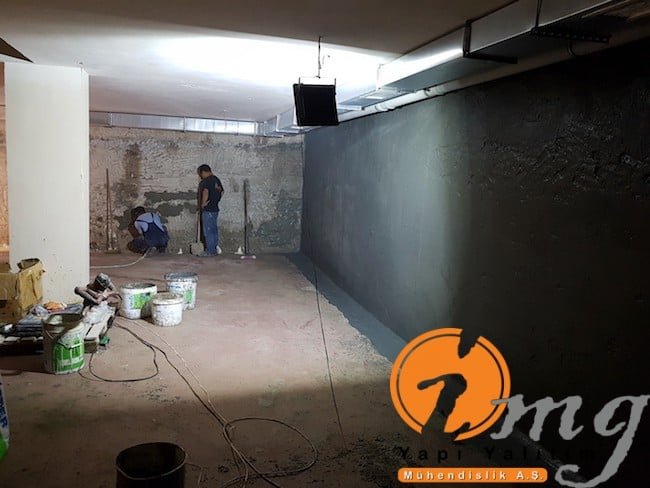
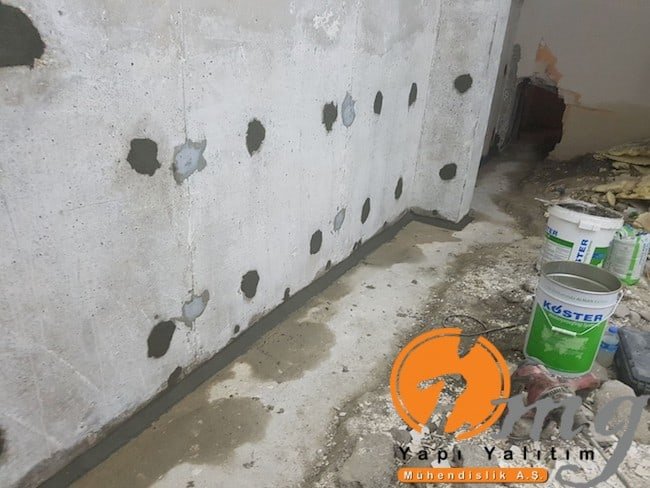
Real application stages from our lift pit waterproofing projects. Click a photograph to enlarge it.
In our lift pit waterproofing work we use the crystalline tanking and polyurethane injection materials of our own brand, Dryvatec. Because we manufacture the material ourselves, quality control is in our hands from start to finish. There is no middleman margin — you get a direct manufacturer's guarantee.
Many waterproofing contractors buy in materials from various brands; we use Dryvatec products made to our own formulation. That gives us full control over material quality, batch consistency and the success of the application. Dryvatec products are manufactured in accordance with the applicable TSE EN standards. In confined, high-pressure environments such as lift pits, material quality is critical.
A lift pit is a confined, deep working environment with live electrical services. Flawed work puts life safety at risk. Choosing the right contractor is critical.
Every lift pit application comes with a written 5-year warranty certificate. Any issue covered by the warranty is resolved at no charge. Our application records are archived.
We manufacture the crystalline and injection materials we use ourselves. No middleman margin — quality control stays entirely with us. A direct manufacturer's guarantee.
Full compliance with health and safety procedures in the confined, deep pit environment. Coordinated working with the lift company, electrical isolation and ventilation control.
Hundreds of lift pit waterproofing projects completed since 2009. We have delivered solutions for every pit type, every depth and every level of water pressure.
Rapid response to every district from our Maltepe (Istanbul) and Konak (Izmir) offices. Local crews and material depots in both major cities.
Rather than covering the problem over, we trace it to its source. A detailed survey with moisture meters is the foundation of a permanent solution.
From our two offices we provide lift pit waterproofing across every district of Istanbul and Izmir.
From our Maltepe office we provide lift pit waterproofing across every district of Istanbul. On-site surveys and applications on both the European and Asian sides.
From our Konak office we provide lift pit waterproofing across every district of Izmir. A wide service network throughout the Aegean region.
The questions our customers ask most often, with our technical answers.
A permanent, no-dig solution to basement water ingress using internal crystalline tanking and resin injection — with a 5-year warranty.
DetailsStop active leaks through cracks and joints within minutes using polyurethane resin injection.
DetailsA permanent solution to rising damp at ground-floor level using DampStop injection and crystalline tanking.
DetailsFor the water problem in your lift pit, fill in the survey request form or give us a call. Our technical team will get back to you promptly to arrange an on-site assessment and survey.