Permanent waterproofing for wet rooms such as bathrooms, WCs, kitchens and balconies using liquid-applied waterproofing and membrane systems, backed by a 5-year warranty. Expert team with 15+ years of experience in Istanbul and Izmir.
Wet room waterproofing is a protective layer applied to the concrete beneath the tiles in bathrooms, WCs, kitchens and utility rooms; it prevents drips into the flat below, mould growth and the risk of compensation claims. Once the tiles are removed, the surface is prepared and special tape is applied to corners and junctions; a liquid-applied membrane is then applied in at least two coats. After a flood test the tiles are laid, and a 5-year written warranty is issued.
Wet room waterproofing is the process of making the floors and walls of rooms in direct, constant contact with water — bathrooms, WCs, kitchens, utility rooms and balconies — watertight. A liquid-applied membrane or a screed-level membrane installed beneath the tiled finish creates an impermeable barrier layer. This barrier prevents the water that passes through the grout joints during everyday use from reaching the body of the concrete and seeping into the floor below or adjoining rooms.
Wet rooms are the most intensively water-exposed areas of a home. Showering, bathroom cleaning and washing up bring water into constant contact with floors and walls. Tiles alone are not waterproof; the grout joints let water through. A professional waterproofing layer beneath the tiles is therefore essential.
With over 15 years of site experience and its own Dryvatec-branded materials, İMG Yapı Yalıtım Mühendislik A.Ş. delivers permanent, warranted wet room waterproofing solutions. Our applications — verified by proper surface preparation, careful detailing and a flood test — are covered by a 5-year written warranty.
Wet rooms are the spaces in a home exposed to the most intensive water use. During bathing, showering, WC use and kitchen activities, water is constantly in contact with floors and walls. Tiling is not a waterproofing material; grout joints are permeable. Water passing through the joints reaches the concrete surface beneath and, over time, seeps into the floor below, causing damage. Because this is a slow process, by the time it is noticed it has usually reached a serious scale.
In older buildings especially, wet room waterproofing was either never installed or the materials of the period have reached the end of their life. Bituminous felts, plastic sheeting and low-quality waterproofing materials degrade, crack and stop working within 10-15 years. The result is ceiling damp stains, dripping, mould and odour complaints in the flat below. The problem threatens not just the downstairs neighbour but the building's structural frame as well.
Replacing only the tiles during a renovation and skipping the waterproofing is the most common mistake. Fixing new tiles over an unchecked old waterproofing layer allows an invisible water problem to continue. The issue goes unnoticed until the neighbour below complains of water damage — and by then the cost is far higher. The cost of waterproofing one bathroom is very small compared with the damage and compensation a leak can cause.
A key statistic: more than 65%of water damage in homes originates in wet rooms. Bathrooms, WCs and kitchens are the spaces that produce the most leaks in a building. Correctly installed wet room waterproofing protects your own home, your downstairs neighbour and the building's structural frame. Early intervention minimises structural damage, health risks and legal liability.
Dripping water, damp stains and blistering paint on the downstairs neighbour's ceiling after bathing or showering. The most common complaint.
Persistent damp, staining and flaking paint on bathroom party walls and floor-wall junctions.
Mould spores multiplying rapidly in damp conditions — allergies, respiratory complaints and a genuine health threat.
Compensation claims for water damage caused to the neighbour below, disputes with building management and repair costs.
If you have noticed one or more of the signs below, your wet rooms have a waterproofing problem. Early intervention minimises structural damage and cost.
Brownish-yellow damp stains on the downstairs neighbour's ceiling — or your own lower floor — in line with the bathroom. A stain that grows after bathing is a clear indicator.
Paint bubbles, cracking and peeling on the walls of rooms adjoining the bathroom or on the ceiling below. Moisture pushes the paint off from within.
Black mould patches in grout joints, on silicone seals and in bathroom corners. Ventilation alone will not cure it — the source has to be eliminated.
A persistent smell of mould and damp in the bathroom or the adjoining room. A smell that does not clear with ventilation is the sign of a hidden leak.
Darkening, algae growth and a sticky feel in the grout joints caused by constant moisture. It reappears within hours of being cleaned.
Floor tiles lifting, rocking or sounding hollow. This shows the waterproofing layer beneath has failed and water has started to break down the adhesive.
There are two principal approaches to wet room waterproofing. The right method for the characteristics of the space is determined by an on-site survey.
At İMG Yapı Yalıtım Mühendislik A.Ş. we generally prefer liquid-applied waterproofing for wet rooms. Providing complete coverage at corners, junctions and pipe penetrations, it delivers the most reliable result in confined spaces such as bathrooms and WCs. Sheet membranes are reserved for special cases and terrace applications. We determine the most suitable method for your building through an on-site survey.
A systematic wet room waterproofing process refined over more than 15 years of site experience.
Our specialist team inspects the wet room thoroughly, identifying existing leak points, moisture beneath the tiles, pipe penetrations, drain connections and the condition of the floor screed. Floor and wall moisture is measured with professional moisture meters. The floor below is checked for signs of leakage. This detailed survey is the foundation of a correct application plan. An incomplete or superficial survey leads to a flawed plan and recurring problems.
The existing tiles and adhesive layers are removed completely. Any old waterproofing layer on the floor and walls is inspected and, where necessary, removed entirely. The concrete or screed surface is mechanically cleaned, loose particles and dust are removed. Cracks and damaged areas are made good with structural repair mortar. The surface is brought to a sound, even condition on which the liquid-applied waterproofing can achieve full adhesion. This step is the most critical stage, directly determining the success of the application.
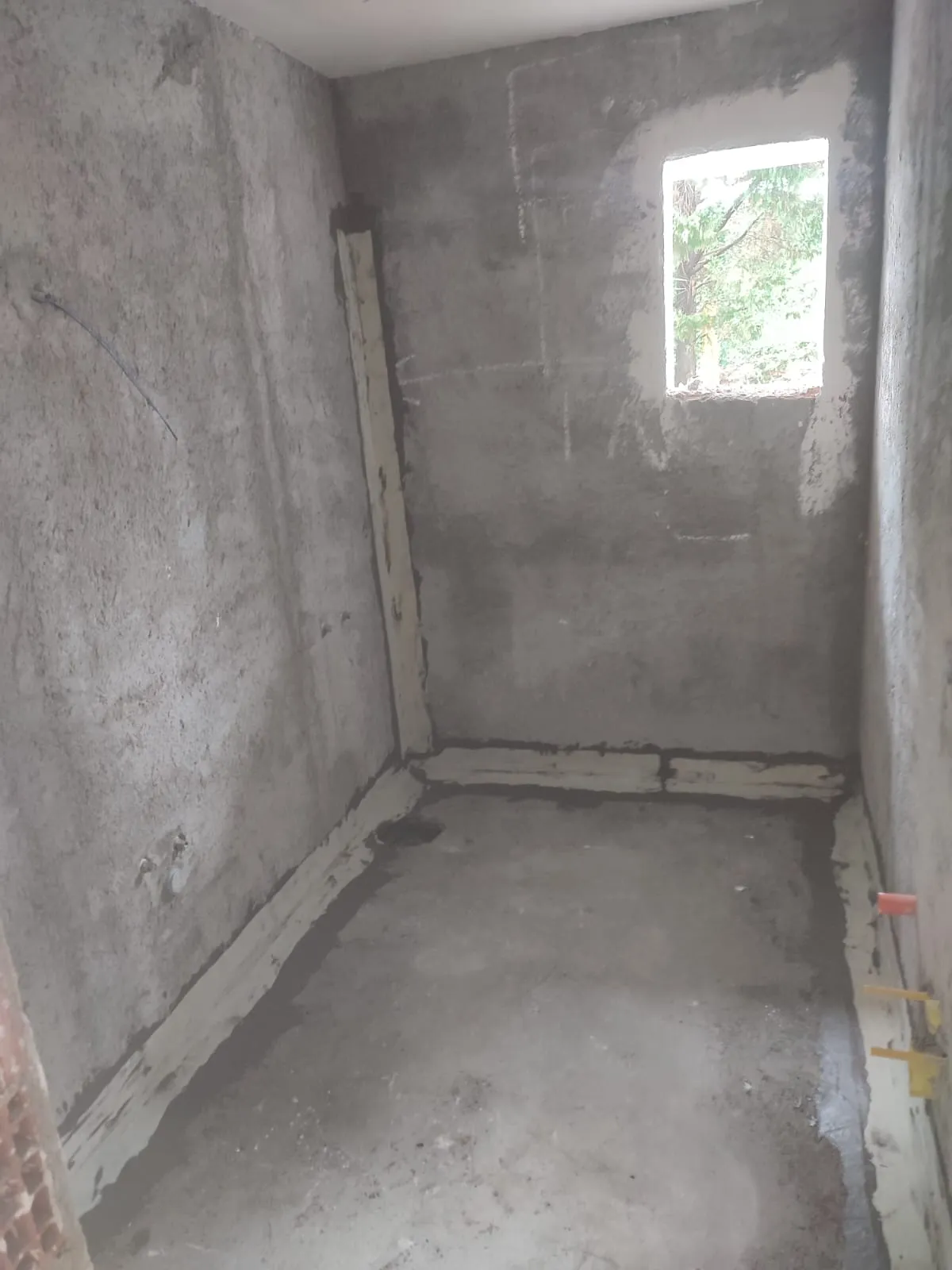
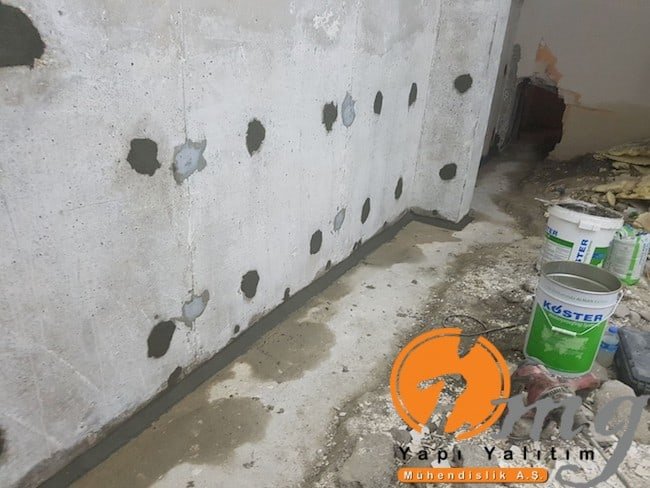
The most sensitive points of wet room waterproofing are the corner and junction details. Floor-wall junctions, internal corners, pipe penetrations (water supply, waste outlet, soil pipe) and the area around the drain are reinforced with special flexible tape and corner profiles. These are the points where water penetrates most and where the waterproofing is under greatest stress. Mistakes in the detailing render the entire surface waterproofing worthless. At İMG Yapı Yalıtım Mühendislik we place particular emphasis on detailing workmanship.
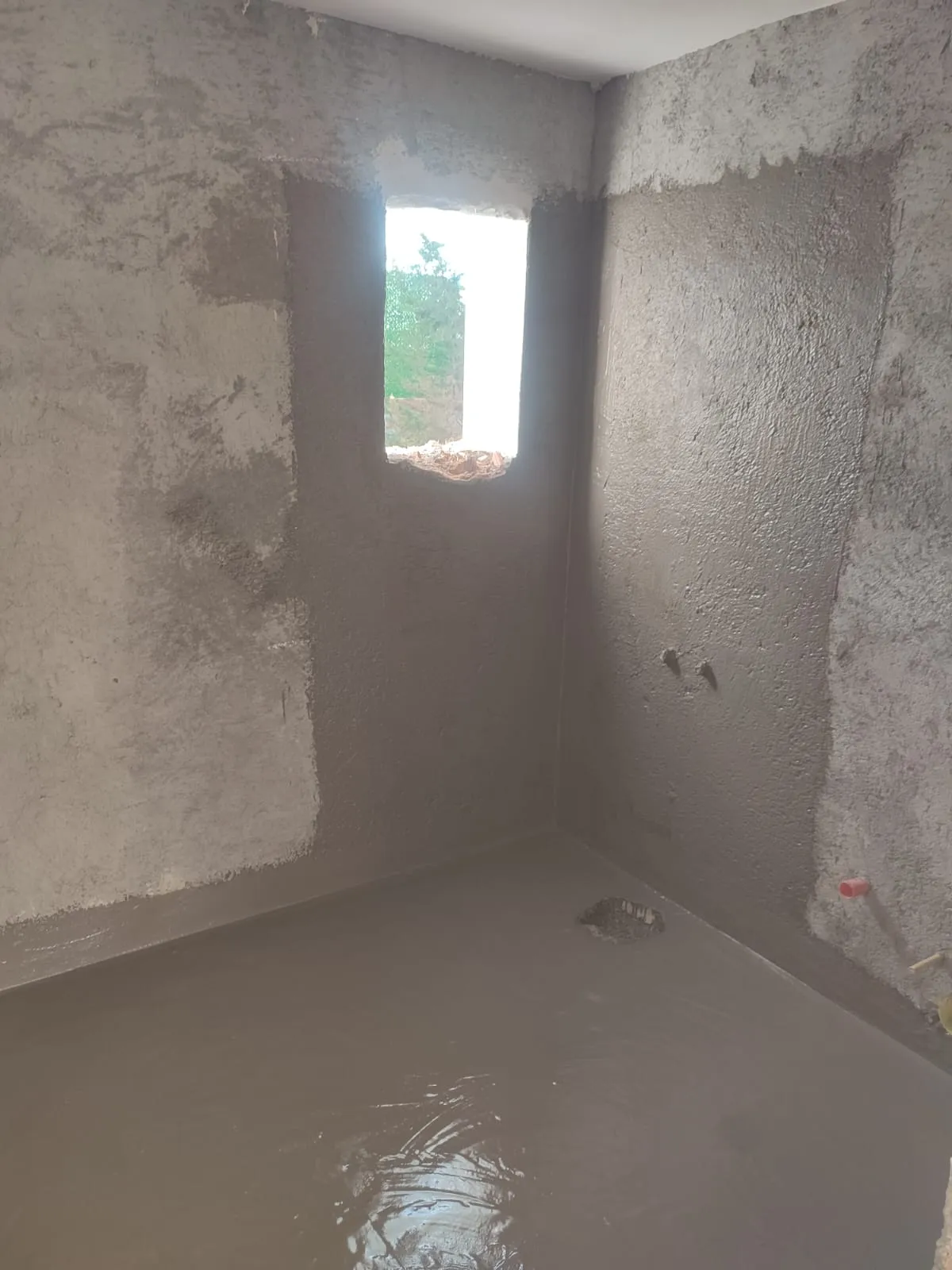
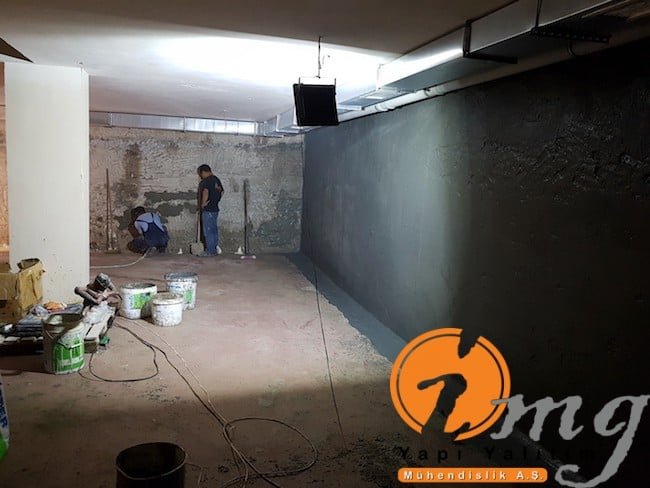
Dryvatec liquid-applied waterproofing material is applied to the floor and walls (up to ceiling height in the shower area, and to a minimum height of 20 cm on the other walls) in at least two coats. After the first coat, the curing time is observed. The second coat is applied at right angles to the first, creating a seamless, single-piece watertight layer. The drain surround, pipe penetrations and corner tapes are coated over without interruption. Avoiding air bubbles and voids is critically important.
Once the liquid-applied waterproofing is complete and cured, the floor is filled with water to a set level and left for 24 to 48 hours. Throughout this period the floor below is checked in detail for any sign of leakage. If a leak is detected, the affected area is identified, reinforcing waterproofing is applied and the test is repeated. Work does not proceed to the next stage (tiling) until the flood test has been passed. This test is also a precondition of our warranty certificate.
After the flood test is passed, the tiling is carried out. Particular care is taken during tiling not to damage the waterproofing layer. A watertight, flexible grout is used for the joints. Once all work is complete, the room is handed over and a 5-year written warranty certificate is issued. Photographs of the application area are archived and your project is placed on record.
For wet room waterproofing to be successful and long-lasting, the following technical requirements must be met in full.
Real application stages from our wet room waterproofing projects. Click the photos to enlarge.
In wet room waterproofing applications we use the liquid-applied waterproofing material, flexible corner tape, detailing profiles and grout materials of our own brand, Dryvatec. Because we manufacture the material ourselves, quality control is in our hands from start to finish. There is no middleman margin — you get a direct manufacturer's assurance.
Many waterproofing companies on the market buy in materials from various brands; we use Dryvatec products made to our own formulation. This gives us full control over material quality, batch consistency and the success of the application. Dryvatec products are manufactured to TSE EN standards.
Visit our YouTube channel for real site footage and application details.
The wrong material, incomplete detailing or a skipped flood test can make the problem worse instead of solving it. Choosing the right contractor is critical.
Every wet room application comes with a 5-year written warranty certificate. Any issue covered by the warranty is resolved at no cost. Our application archives are kept on record.
We manufacture the liquid-applied waterproofing and detailing materials we use ourselves. No middleman margin — quality control is entirely in our hands. Direct manufacturer's assurance.
A 24-48 hour flood test is mandatory in every wet room application. No tiles are laid until the test is passed. This is the foundation of our quality and our warranty.
Thousands of completed wet room waterproofing projects since 2009. We have delivered solutions for every bathroom type, in every condition and with every material.
Rapid response to every district from our Maltepe (Istanbul) and Konak (Izmir) offices. Local teams and material depots in both major cities.
Rather than covering the problem over, we trace it to its source. A detailed survey with moisture meters is the foundation of a permanent solution.
From our two offices we provide wet room waterproofing across every district of Istanbul and Izmir.
From our Maltepe office we provide wet room waterproofing across all districts of Istanbul. On-site surveys and applications on both the European and Asian sides.
From our Konak office we provide wet room waterproofing across all districts of Izmir. A wide service network throughout the Aegean region.
We have compiled the questions our clients ask most often, together with our technical answers.
Permanent solutions for terraces and top floors with membrane and liquid waterproofing. Full protection against rainwater.
DetailsTackling damp, moisture and salt staining on walls at the source. Permanent solutions with crystalline and liquid-applied waterproofing.
DetailsWaterproofing applications that prevent mould and fungal growth. Permanent, effective solutions for healthy living spaces.
DetailsFor a water problem in your bathroom, WC or kitchen, fill in the survey request form or give us a call. Our technical team will get back to you as soon as possible to arrange an on-site assessment and survey.