
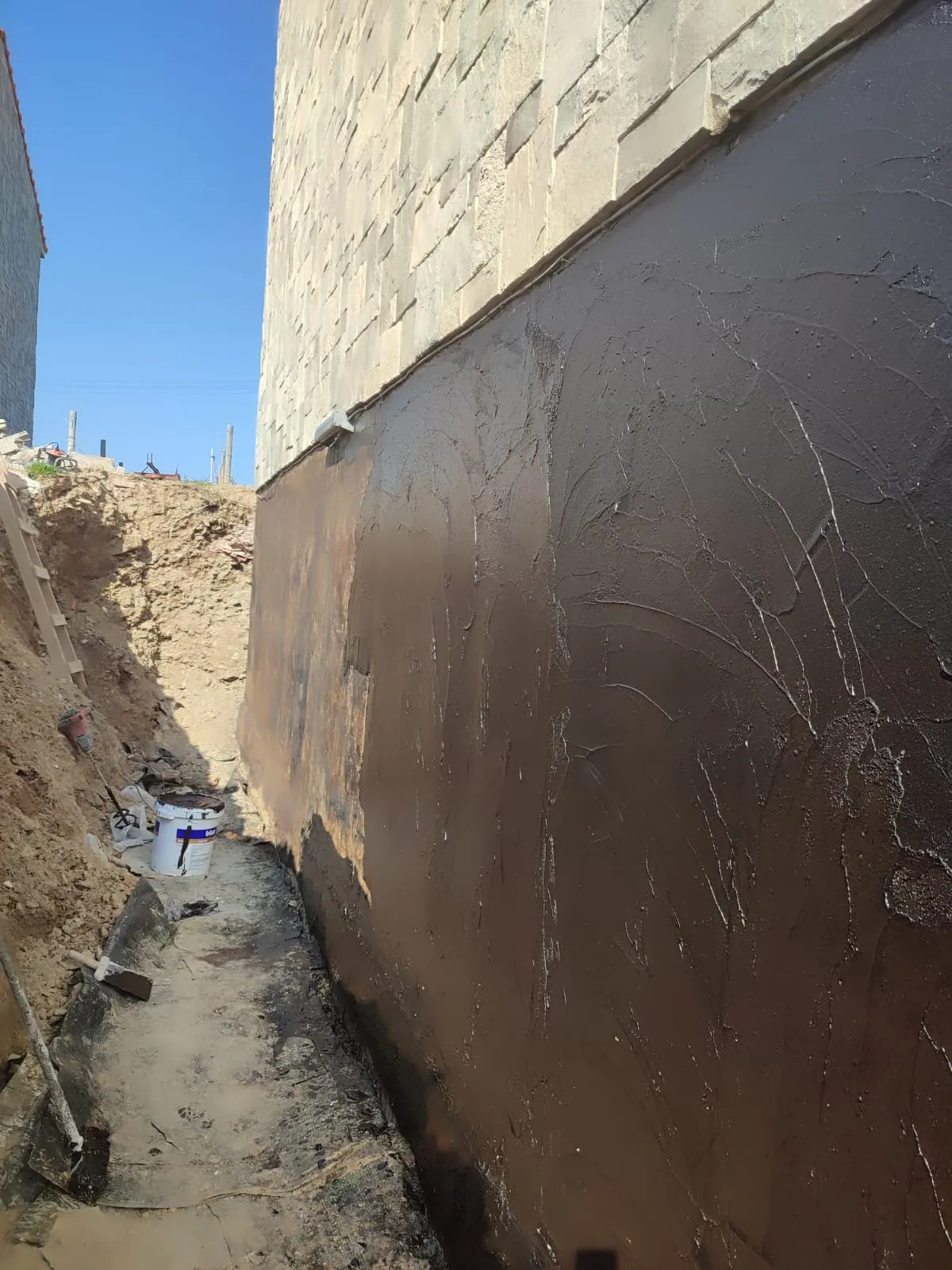
Waterproofing is the protective system that stops water penetrating the structure at every critical point of a building, from the roof down to the foundations. Waterproofing extends the life of buildings and lets you live in a healthier environment.
Many buildings are structurally sound on paper, yet serious problems emerge over time when waterproofing is left incomplete. Complete waterproofing is essential to keep the steel reinforcement in a building's load-bearing structure from corroding.
The Importance of Waterproofing, in Figures
Research reveals some striking results:
- Water penetrating concrete erodes the diameter of the steel reinforcement inside by roughly 0.25 mm a year.
- In a structure exposed to water for 10 years, the steel reinforcement loses around 60% of its diameter.
- The service life of a building left without waterproofing for 10 years is cut by 67%.
- A study by the Istanbul Metropolitan Municipality covering 55,000 homes found that 79% of structural damage stemmed from inadequate waterproofing.
Where Does the Water Come From?
Buildings face threats from many different sources of water:
- Rain and snow water (via roofs, terraces and balconies)
- Ground moisture and groundwater (basements and foundations)
- Water escaping from wet rooms (bathroom, kitchen, WC)
- Moisture carried upwards by capillary action — rising damp (basement and ground-floor walls)
This is why an integrated waterproofing system from the foundations to the roof terrace is a must.
Why Early Intervention Matters
The earlier a waterproofing problem is spotted, the lower the cost of repair. Damp problems ignored for long periods can, over time, cause irreversible damage to the load-bearing structure.
If you see damp staining, salt deposits (efflorescence), blistering paint or mould in your building, we recommend speaking to a specialist as soon as possible. Fill in the building information form to get information from our technical team.