
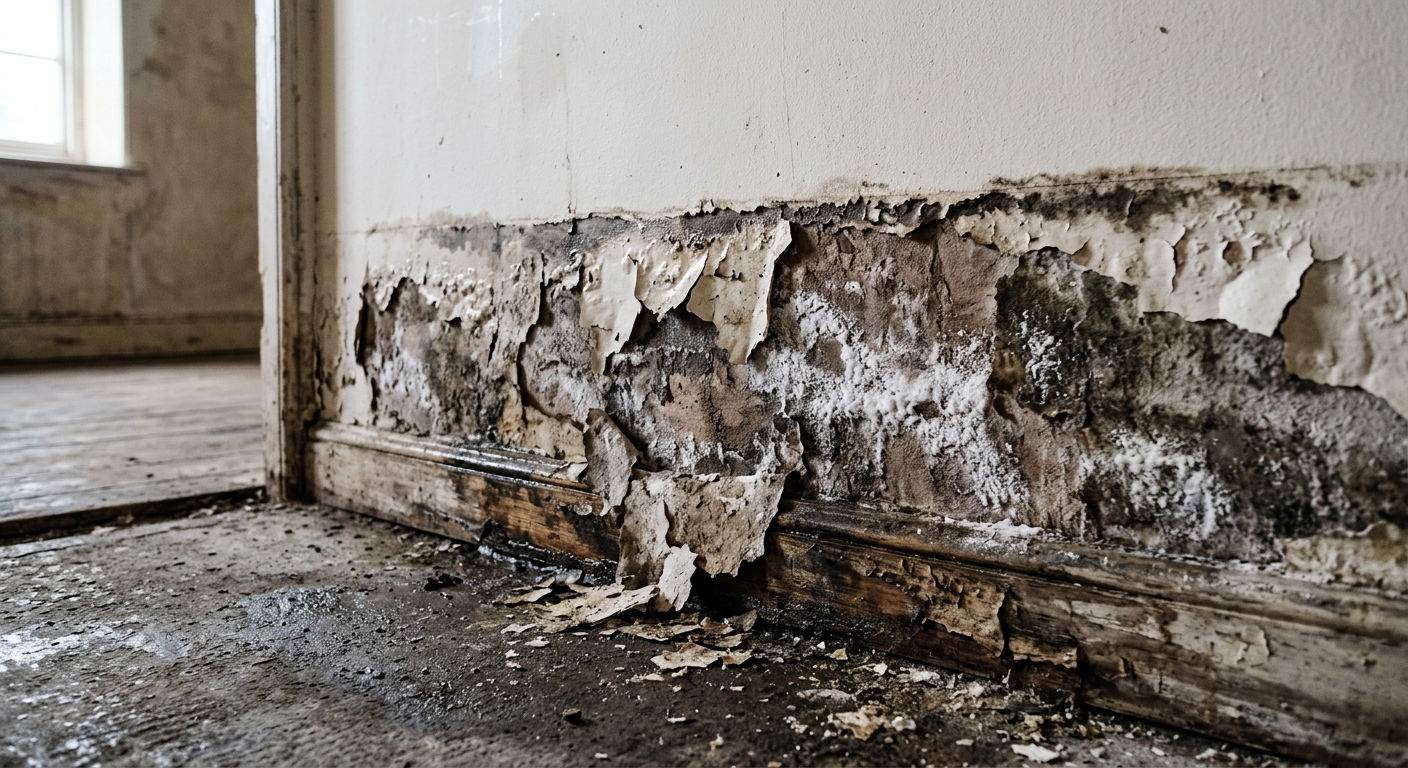
Damp patches on walls near ground level, yellowed paint, salt deposits and mould — all of these can be signs of rising damp (capillary damp). Rising damp is one of the most common forms of damp found in buildings in Turkey, and when treated incorrectly it can turn into a problem that drags on for years. In this guide we explain what rising damp is, how it is diagnosed and — most importantly — how it is cured for good.
What Is Rising Damp?
Rising damp is the phenomenon of ground moisture travelling upwards through the capillary channels in a building's walls. Just as a wick or a sugar cube draws water upwards, porous building materials such as concrete, brick, stone and mortar draw ground moisture up through the body of the wall.
This phenomenon is also known as capillary action or capillary suction. Depending on the wall's material and pore structure, damp can rise 0.5 to 1.5 metres above ground level. In fine-pored materials (thin brick, old mortar), the damp can climb even higher.
The Signs of Rising Damp
Distinguishing rising damp from other forms of damp is critical to choosing the right treatment. It must not be confused with damp caused by condensation or by penetrating damp from outside.
Rising damp typically starts at the base of the wall; it reveals itself through flaking paint, white salt crystals (efflorescence) and dark wet patches.
The typical signs of rising damp are:
- A wet patch starting at floor level: The damp always rises from the bottom upwards. Isolated patches higher up the wall are not rising damp.
- Efflorescence (white salt deposits): Salts dissolved out of the ground are left behind on the surface as the moisture evaporates. They appear as white-grey crystals or powder.
- Flaking paint and plaster: On surfaces exposed to prolonged damp, paint begins to blister and peel away.
- Mould and fungal growth: Permanently damp walls are the ideal breeding ground for mould spores. Mould carries a health risk, as it can cause respiratory problems.
- An earthy, musty smell: Rooms affected by rising damp have a characteristic smell of wet earth.
- Present summer and winter: Rising damp persists regardless of the season. Condensation, by contrast, appears only in cold weather — an important distinguishing feature.
What Causes Rising Damp?
Every building has the potential for capillary suction, but some structures are more prone to the problem:
- A high groundwater table: In locations close to sea level and in areas with a high water table, ground moisture is constantly replenished.
- No damp proof course (DPC): Many buildings constructed between the 1960s and 1980s were built without a damp-proofing layer between the foundations and the walls.
- A damaged or failed damp proof course: An existing DPC can crack or lose its integrity over time.
- Changes in ground level: Ground raised by landscaping or road works can render existing barriers ineffective.
- Porous wall materials: Old brick, stone and certain types of plaster draw in moisture readily because of their high absorbency.
Moisture Measurement and Diagnosis
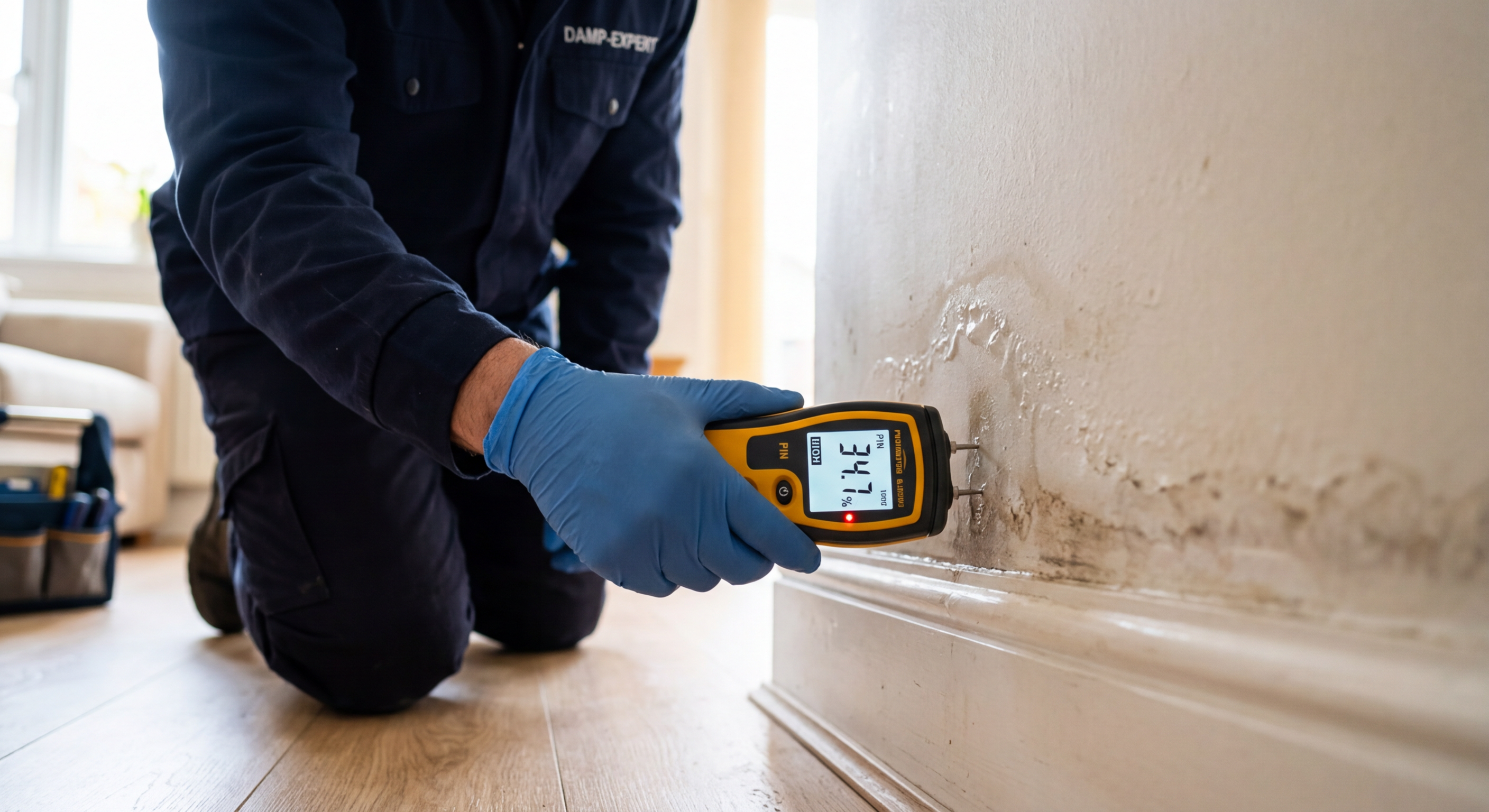 Professional moisture meters measure the moisture content of a wall as a percentage. This measurement is critical in determining the right treatment method.
Measurements taken by a specialist are essential to establish whether the problem is rising damp or another form of damp. The main diagnostic methods used are:
- Electrical moisture meter: Determines the moisture content by measuring resistance at the wall surface. Fast and reliable.
- Hygrometer: Reveals the relationship between air humidity and wall moisture; it is used to rule out condensation as the cause.
- Depth profiling: Samples taken at different depths establish whether the damp is superficial or sits deep within the wall.
- Salt analysis: Examining efflorescence samples shows whether the moisture originates from the ground or from another source.
How Rising Damp Is Treated
Of the treatments used for rising damp, the most reliable and permanent is chemical DPC injection. In addition, electro-physical systems and drainage measures can be appropriate in certain situations.
1. Chemical DPC Injection (the Most Effective)
Regarded as the gold standard in rising damp treatment, this method involves drilling a line of holes into the wall at the level of the new damp proof course. A silicone-based cream, polyurethane or acrylate gel is then injected into these holes under pressure.
The injected material spreads through the pores within the wall and forms a hydrophobic barrier. This barrier blocks the capillary channels and stops the moisture travelling upwards. Done correctly, a single application delivers a permanent solution that can remain effective for decades.
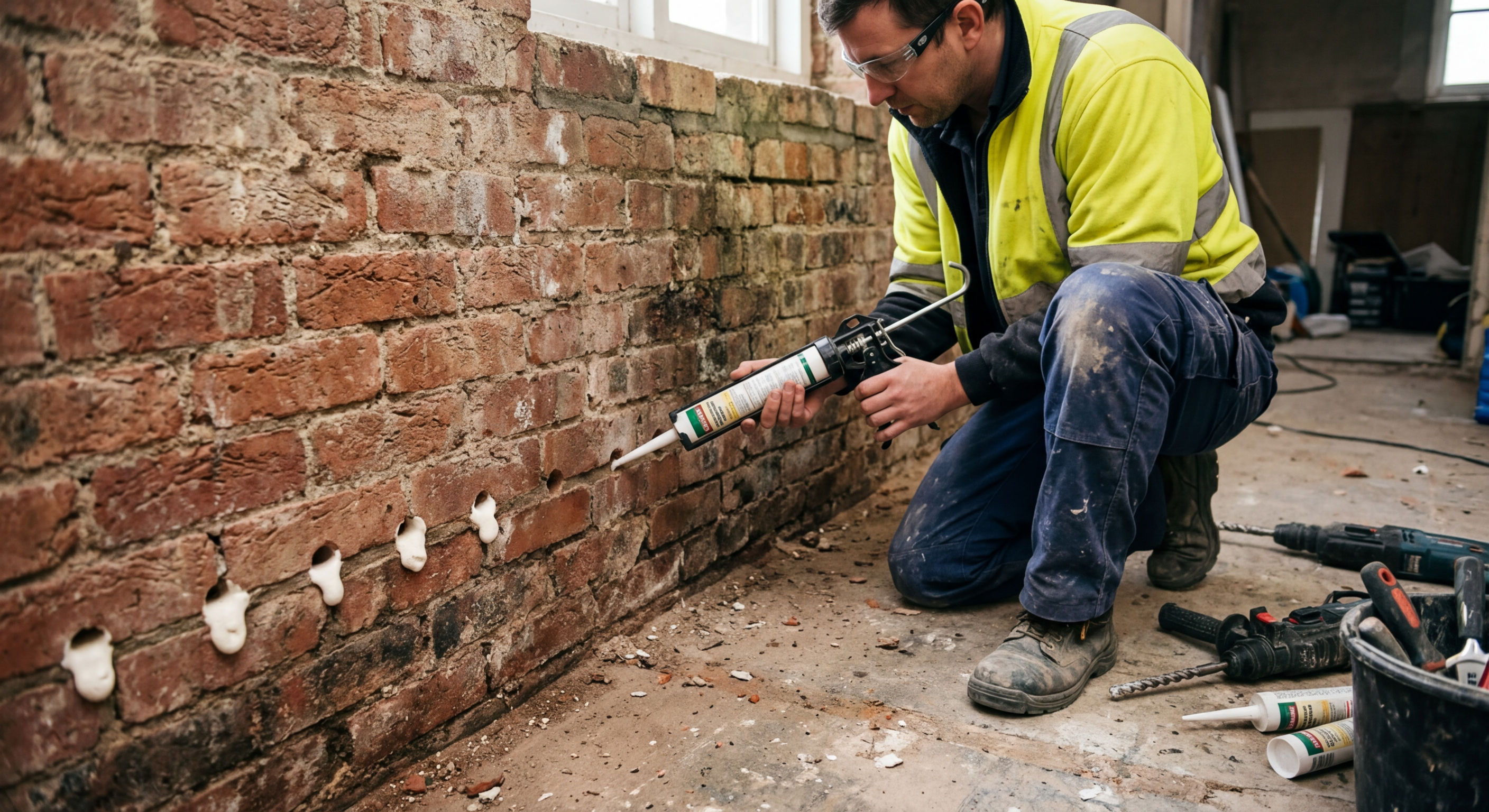 The injection method: a chemical is injected under pressure through holes drilled at regular intervals along the base of the wall, creating a horizontal damp barrier.
2. The Nem Kutusu Unit (Electro-Physical Method)
The Nem Kutusu is a technology that reverses the electrical charge of the water molecules in the wall, changing the direction of capillary movement. It works without any chemicals or structural intervention; it simply plugs into a mains socket and stays active 24 hours a day.
It is a complementary solution favoured particularly in historic buildings and in structures where excavation or injection is not possible. For more details, see our Nem Kutusu page.
3. Drainage and External Waterproofing
Drainage channels and gravel runs can be installed to prevent water accumulating against external wall surfaces in contact with the ground. This method is applied on buildings where intervention from outside makes it possible to cut off the source of the moisture.
Rising Damp Video Guide
You can watch how rising damp develops, how it is diagnosed and how it is treated in the video below:
What to Do After Rising Damp Treatment
Once rising damp has been treated by injection or another method, the existing surface damage also needs to be made good:
- Waiting period: Surface repairs should not be carried out until at least 6 weeks after injection. This time is needed for the material to penetrate the wall fully.
- Salt removal: Efflorescence deposits must be removed mechanically. Salts prevent any plaster or paint applied over them from bonding.
- Breathable plaster: Treated walls should be finished with vapour-permeable (breathable) plaster and paint. Plastic-based materials continue to trap moisture at the surface.
- Ventilation: Regular ventilation must be maintained to prevent mould growth.
Can You Fix Rising Damp Yourself?
The damp-proofing paints and cream products sold on the market do not cure rising damp permanently. Products of this kind create a superficial barrier, but the capillary movement continuing inside the wall overcomes even that barrier in time.
Rising damp is a building defect that demands the right diagnosis, the right material and the right application technique. The cost of a botched application can far exceed the cost of professional help.
Rising Damp Treatment in Istanbul and Izmir
As İMG Yapı Yalıtım Mühendislik A.Ş., we provide specialist rising damp diagnosis and treatment across Istanbul and Izmir. All our treatments use high-performance Dryvatec-branded injection materials and deliver results backed by a 5-year warranty.
Whatever the severity of your problem, you can fill in the building information form for a preliminary assessment, or reach us directly: 0850 532 6 999
For detailed information and application examples, visit our rising damp treatment service page.