
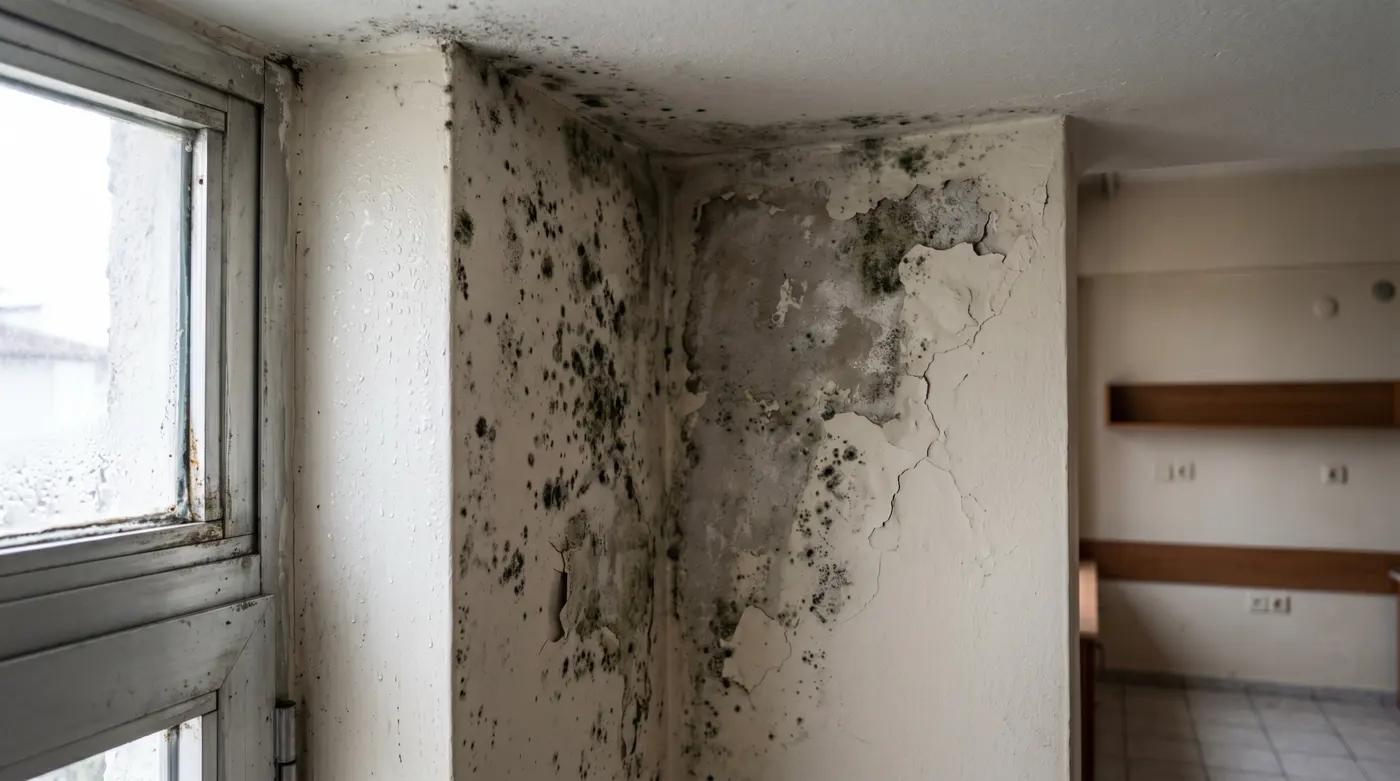
You wiped the mould off the wall and painted over it, and a few months later it reappeared in the same corner — if that scenario sounds familiar, the problem is not the paint but the moisture inside the wall. Mould is not dirt; it is the visible symptom of a damp problem, and no cleaning or painting will last until the source is dealt with. In this article we explain the real causes of mould, its effects on health, and the right solution for each source.
Why Does Mould Form?
Mould fungi need three things to grow: spores (always present in the air), an organic surface (paint, plaster, ceiling) and moisture. You cannot eliminate the first two; the only variable you can control is moisture. That is why the first step towards a permanent solution is finding out by which route the moisture is reaching the wall.
1. Condensation
Water vapour in the indoor air condenses into droplets when it meets a cold surface. Uninsulated external wall corners, window reveals and north-facing walls are the typical condensation zones. The tell-tale sign: mould concentrates in the upper corners and on external walls, and gets worse in winter.
2. Rising Damp (Capillary Action)
Water in the ground is drawn up through the capillary voids of the wall material like a sponge. The tell-tale sign: damp and mould start at floor level and climb upwards in a band of 0.5-1.5 metres, the plaster blisters, and salt staining (white crystals) appears. For more detail, see our rising damp guide.
3. Plumbing, Roof and Façade Leaks
A leaking supply or waste pipe inside the wall, the neighbouring flat's bathroom, rainwater entering through a roof gutter or façade joints... The tell-tale sign: the mould concentrates in one localised area, the stain has a sharply defined edge, and it darkens after rain or after use. For source-tracing methods, read our leak diagnosis article.
4. Damp Penetration in Basements and Ground Floors
On earth-retaining walls, missing waterproofing lets moisture pass straight into the interior. Widespread damp combined with a musty smell in the basement is usually the sign of missing basement waterproofing.
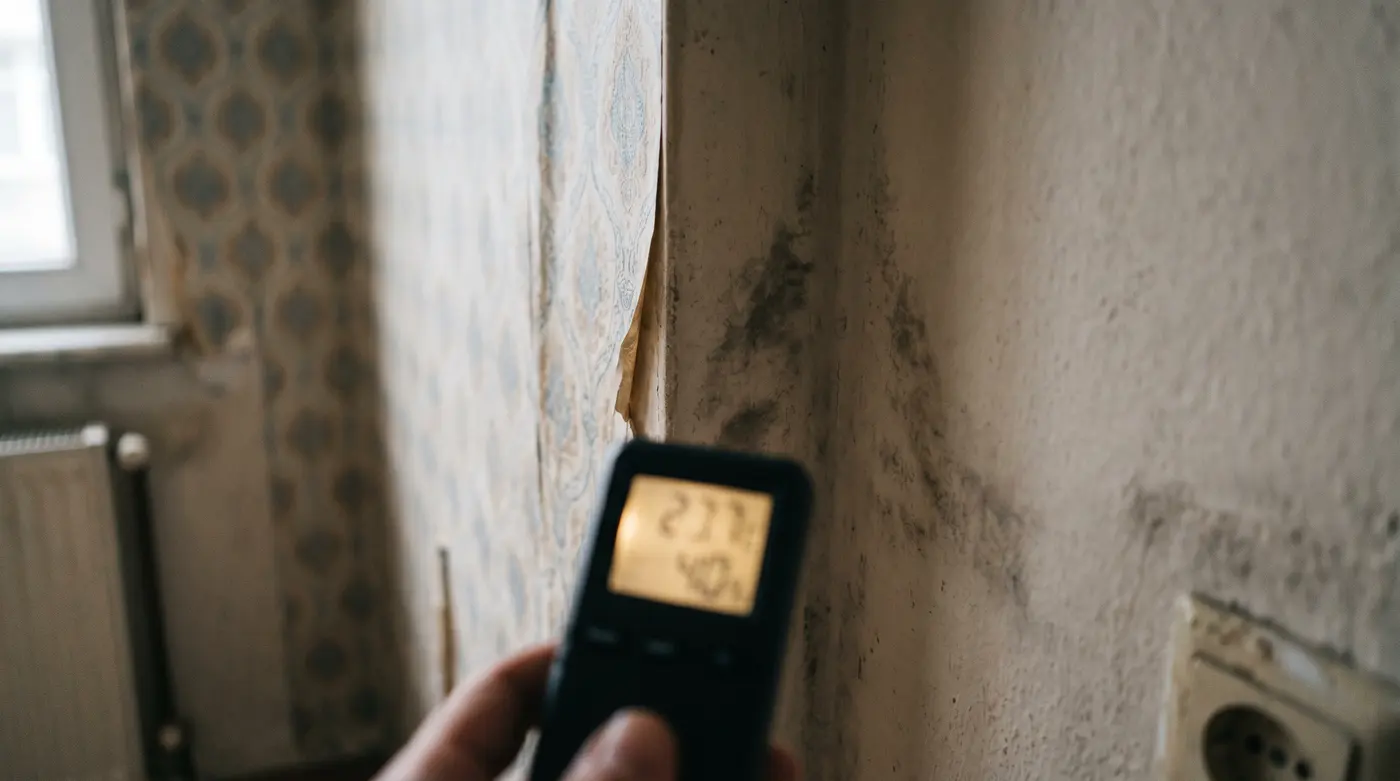 Moisture measurement takes the guesswork out of finding the source of mould: condensation, rising damp or a leak — the answer comes from the wall's moisture map.
The Health Effects of Mould
Mould spores enter the body through the airways. The World Health Organization's reports on indoor air quality show that living in damp, mouldy housing significantly increases the risk of asthma, allergic rhinitis and respiratory infections. The risk is higher for children, the elderly and people with weakened immune systems. Mould in a bedroom or a child's room is not a "cosmetic issue" — it is a health priority.
Why Vinegar and Bleach Are Not the Answer
Killing the mould on the surface is possible; but as long as the mycelium network inside the plaster — and above all the moisture source — remains in place, the mould returns within weeks. What's more, bleach itself loads extra water into the wall. Surface cleaning only makes sense once the source has been dealt with — and at that stage it should be done with anti-mould primer systems.
The Permanent Solution, by Source
- Condensation: Insulating thermal bridges, regular ventilation (cross-ventilating 2-3 times a day for 5-10 minutes), mechanical ventilation where needed. Using an extractor fan in bathrooms and kitchens.
- Rising damp: A horizontal damp barrier at the base of the wall (DampStop injection) plus moisture-regulating plaster (HydroFix) — the Dryvatec 3-stage system. Details: rising damp waterproofing.
- Plumbing/roof leaks: Leak detection, repair, then a damp barrier and re-plastering in the damaged area.
- Earth-retaining walls: Internal waterproofing with a crystalline coating and, where needed, injection.
- Complementary measures: Keeping ambient humidity balanced in enclosed, damp spaces with the electricity-free Dryvatec moisture box (Nem Kutusu); anti-mould systems for lasting protection.
5 Practical Ways to Prevent Mould
- Cross-ventilate briefly in the morning by opening windows on opposite sides; ventilate in short, intensive bursts rather than leaving a window permanently ajar.
- Pull furniture 5-10 cm away from external walls to allow air to circulate.
- Avoid drying laundry indoors where possible; if you do, give that room extra ventilation.
- In the bathroom and kitchen, remove steam at its source with an extractor fan.
- Keep indoor relative humidity in the 50-60% band; a simple hygrometer is all you need to monitor it.
Frequently Asked Questions
Is it harmful to sleep in a mouldy room?
Long-term exposure can worsen respiratory complaints, especially in children and people prone to allergies. Mould in a bedroom should be resolved — together with its source — as soon as possible.
Does mould only occur in old buildings?
No. In new buildings, painting before the construction moisture in the concrete and plaster has fully dried out can set the stage for condensation-type mould in the first 1-2 years. Ventilation habits are decisive here too.
Will a dehumidifier solve the problem?
It eases the symptom by lowering ambient humidity; but if water is entering the wall from outside or from the ground, it will not deliver a lasting result until the source is dealt with. The device is an aid to the solution — not the solution itself.
Damp and Mould Solutions in Istanbul and Izmir
As İMG Yapı Yalıtım Mühendislik A.Ş., we identify the source of the damp and deliver permanent mould and damp solutions with the Dryvatec system across Istanbul and Izmir; our applications carry a 5-year written warranty. Fill in the building information form or call us: 0850 532 6 999